A phase change material (PCM) is a substance which releases/absorbs sufficient energy at phase transition to provide useful heat/cooling. Generally the transition will be from one of the first two fundamental states of matter - solid and liquid - to the other. The phase transition may also be between non-classical states of matter, such as the conformity of crystals, where the material goes from conforming to one crystalline structure to conforming to another, which may be a higher or lower energy state.
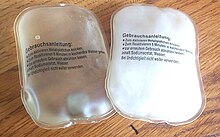
A sodium acetate heating pad. When the sodium acetate solution crystallises, it becomes warm.
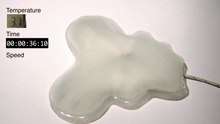
A video showing a "heating pad" in action
The energy released/absorbed by phase transition from solid to liquid, or vice versa, the heat of fusion is generally much higher than the sensible heat. Ice, for example, requires 333.55 J/g to melt, but then water will rise one degree further with the addition of just 4.18 J/g. Water/ice is therefore a very useful phase change material and has been used to store winter cold to cool buildings in summer since at least the time of the Achaemenid Empire.
By melting and solidifying at the phase change temperature (PCT), a PCM is capable of storing and releasing large amounts of energy compared to sensible heat storage. Heat is absorbed or released when the material changes from solid to liquid and vice versa or when the internal structure of the material changes; PCMs are accordingly referred to as latent heat storage (LHS) materials.
There are two principal classes of phase change material: organic (carbon-containing) materials derived either from petroleum, from plants or from animals; and salt hydrates, which generally either use natural salts from the sea or from mineral deposits or are by-products of other processes. A third class is solid to solid phase change.
PCMs are used in many different commercial applications where energy storage and/or stable temperatures are required, including, among others, heating pads, cooling for telephone switching boxes, and clothing.
By far the biggest potential market is for building heating and cooling. PCMs are currently attracting a lot of attention for this application due to the progressive reduction in the cost of renewable electricity, coupled with limited hours of availability, resulting in a misfit between peak demand and availability of supply. In North America, China, Japan, Australia, Southern Europe and other developed countries with hot summers peak supply is at midday while peak demand is from around 17:00 to 20:00. This creates a lot of demand for storage media.
Solid-liquid phase change materials are usually encapsulated for installation in the end application, to contain in the liquid state. In some applications, especially when incorporation to textiles is required, phase change materials are micro-encapsulated. Micro-encapsulation allows the material to remain solid, in the form of small bubbles, when the PCM core has melted.
Characteristics and classificationEditLatent heat storage can be achieved through changes in the State of matter from liquid→solid, solid→liquid, solid→gas and liquid→gas. However, only solid→liquid and liquid→solid phase changes are practical for PCMs. Although liquid–gas transitions have a higher heat of transformation than solid–liquid transitions, liquid→gas phase changes are impractical for thermal storage because large volumes or high pressures are required to store the materials in their gas phase. Solid–solid phase changes are typically very slow and have a relatively low heat of transformation.
Initially, solid–liquid PCMs behave like sensible heat storage (SHS) materials; their temperature rises as they absorb heat. Unlike conventional SHS materials, however, when PCMs reach their phase change temperature (their melting point) they absorb large amounts of heat at an almost constant temperature until all the material is melted. When the ambient temperature around a liquid material falls, the PCM solidifies, releasing its stored latent heat. A large number of PCMs are available in any required temperature range from −5 up to 190 °C.[1] Within the human comfort range between 20 and 30 °C, some PCMs are very effective, storing over 200 kJ/kg of latent heat, as against a specific heat capacity of around one kJ/(kg*°C) for masonry. The storage density can therefore be 20 times greater than masonry per kg if an temperature swing of 10 °C is allowed.[2] However, since the mass of the masonry is far higher than that of PCM this specific (per mass) heat capacity is somewhat offset. A masonry wall might have a mass of 200 kg/m2, so to double the heat capacity one would require additional 10 kg/m2 of PCM.

[3] Example Organic Bio-based PCM in a poly/foil encapsulation for durability in building applications, where it works to reduce HVAC energy consumption and increase occupant comfort.
Organic PCMsEdit
Hydrocarbons, primarily paraffins (CnH2n+2) and lipids but also sugar alcohols.[4][5][6]
- Advantages
- Freeze without much supercooling
- Ability to melt congruently
- Self nucleating properties
- Compatibility with conventional material of construction
- No segregation
- Chemically stable
- Safe and non-reactive
- Disadvantages
- Low thermal conductivity in their solid state. High heat transfer rates are required during the freezing cycle. Nano composites were found to yield an effective thermal conductivity increase up to 216%.[7][8]
- Volumetric latent heat storage capacity can be low
- Flammable. This can be partially alleviated by specialised containment.
InorganicEdit
Salt hydrates (MxNyH2O) [9]
- Advantages
- High volumetric latent heat storage capacity
- Availability and low cost
- Sharp melting point
- High thermal conductivity
- High heat of fusion
- Non-flammable
- Disadvantages
- Difficult to prevent incongruous melting and phase separation upon cycling, which can cause a significant loss in latent heat enthalpy.[10]
- Corrosive to many other materials, such as metals.[11][12][13] This can be overcome by encapsulation in small quantities in non-reactive plastic.
- Change of volume is very high in some mixtures
- Super cooling can be a problem in solid–liquid transition, necessitating the use of nucleating agents which may become inoperative after repeated cycling
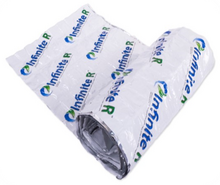
Example: eutectic salt hydrate PCM with nucleation and gelling agents for long-term thermal stability and thermoplastic foil macro-encapsulation physical durability. Applied for passive temperature stabilization to result in building HVAC energy conservation.[14]
Hygroscopic materialsEdit
Many natural building materials are hygroscopic, that is they can absorb (water condenses) and release water (water evaporates). The process is thus:
- Condensation (gas to liquid) ΔH<0; enthalpy decreases (exothermic process) gives off heat.
- Vaporization (liquid to gas) ΔH>0; enthalpy increases (endothermic process) absorbs heat (or cools).
Whilst this process liberates a small quantity of energy, large surfaces area allows significant (1–2 °C) heating or cooling in buildings. The corresponding materials are wool insulation and earth/clay render finishes.
Solid-solid PCMsEdit
A specialised group of PCMs that undergo a solid/solid phase transition with the associated absorption and release of large amounts of heat. These materials change their crystalline structure from one lattice configuration to another at a fixed and well-defined temperature, and the transformation can involve latent heats comparable to the most effective solid/liquid PCMs. Such materials are useful because, unlike solid/liquid PCMs, they do not require nucleation to prevent supercooling. Additionally, because it is a solid/solid phase change, there is no visible change in the appearance of the PCM, and there are no problems associated with handling liquids, e.g. containment, potential leakage, etc. Currently the temperature range of solid-solid PCM solutions spans from -50 °C (-58 °F) up to +175 °C (347 °F).[15]
Nano Enhanced Phase change Materials (NePCM)EditDispersing thermally conductive nanostructures is an effective method to improve the thermal performance of phase change materials (PCMs). For this purpose, nanocarbons, nanometals, and nano metal oxides have been used to develop nano-enhanced phase change materials (NePCMs) with unique thermal properties. In 2007, Khodadadi and Hosseinizadeh firstly reported on the accelerated freezing process of water enhanced by Cu nanoparticles. They reported that the freezing time of water was shortened from 3000 s to 1400 s by dispersing 20 vol.% of nanocopper. After that research, various aspects of NePCMs were investigated by other researchers.
Triplex shell-and-tube systems filled with NePCM, adding porous copper foam to NePCM, the effect of cavity aspect ratio on NePCM are some of these field that have been investigated yet.
Selection criteriaEditThe phase change material should possess the following thermodynamic properties:[16]
- Melting temperature in the desired operating temperature range
- High latent heat of fusion per unit volume
- High specific heat, high density, and high thermal conductivity
- Small volume changes on phase transformation and small vapor pressure at operating temperatures to reduce the containment problem
- Congruent melting
Kinetic properties
- High nucleation rate to avoid supercooling of the liquid phase
- High rate of crystal growth, so that the system can meet demands of heat recovery from the storage system
Chemical properties
- Chemical stability
- Complete reversible freeze/melt cycle
- No degradation after a large number of freeze/melt cycle
- Non-corrosiveness, non-toxic, non-flammable and non-explosive materials
Economic properties
Thermophysical propertiesEdit
Common PCMsEdit
| Material | Organic
PCM | Melting
point, Tm | Heat of
fusion, ΔHfus
kJ/kg | Heat of
fusion, ΔHfus
MJ/m3 | Specific
heat, cp
solid
kJ/kg·K | Specific
heat, cp
liquid
kJ/kg·K | Density, ρ
solid
kg/m3 | Density, ρ
liquid
kg/m3 | Thermal
conductivity, k
solid
W/m·K | Thermal
conductivity, k
liquid
W/m·K | VHC
solid
kJ/m3·K | VHC
liquid
kJ/m3·K | Thermal
effusivity, e
solid
J/m2·K·s1/2 | Cost
USD/kg |
|---|
| Water | No | 0 °C (32 °F) | 333.6 | 319.8 | 2.05 | 4.186 | 917 | 1,000 | 1.6[17]-2.22[18] | | 1,880 | 4,186 | 1,890 | 0.001[19] |
| Sodium sulfate (Na2SO4·10H2O) | No | 32.4 °C (90.3 °F) | 252 | | | | | | | | | | | 0.05[20] |
| NaCl·Na2SO4·10H2O | No | 18 °C (64 °F) | 286 | | | | | | | | | | | 0.05[20] |
| Lauric acid | Yes[21][22] | 44.2 °C (111.6 °F)[23] | 211.6 | 197.7 | 1.76 | 2.27 | 1,007 | 862 | | | 1,772 | 1,957 | | 1.60[24][25] |
| TME(63%) / H2O(37%) | Yes[21][22] | 29.8 °C (85.6 °F) | 218.0 | 240.9 | 2.75 | 3.58 | 1,120 | 1,090 | | | 3,080 | 3,902 | | |
| LiNO3.3H2O | No | 30.15 °C (86.27 °F) | 287[26] | | | | | | | | | | | |
| Mn(NO3)2·6H2O / MnCl2·4H2O(4%) | No[27][28] | 15–25 °C (59–77 °F) | 125.9 | 221.8 | 2.34 | 2.78 | 1,795 | 1,728 | | | 4,200 | 4,804 | | |
| Na2SiO3·5H2O | No[27][28] | 72.2 °C (162.0 °F) | 267.0 | 364.5 | 3.83 | 4.57 | 1,450 | 1,280 | 0.103−0.128[29] | | 5,554 | 5,850 | 801 | 8.04[30] |
| Aluminium | No | 660 °C (1,220 °F) | 396.9 | 1,007.2 | 0.8969 | | 2,700 | 2,375 | 237[31][32] | | 2,422 | ? | 23,960 | 2.05[33] |
| Copper | No | 1,085 °C (1,985 °F) | 208.7 | 1,769.5 | 0.3846 | | 8,940 | 8,020 | 401[34] | | 3,438 | ? | 37,130 | 6.81[35] |
| Gold | No | 1,064 °C (1,947 °F) | 63.72 | 1,166.3 | 0.129 | | 19,300 | 17,310 | 318[36] | | 2,491 | | 28,140 | 34,298[35] |
| Iron | No | 1,538 °C (2,800 °F) | 247.3 | 1,836.6 | 0.4495 | | 7,874 | 6,980 | 80.4[37] | | 3,539 | | 16,870 | 0.324[38] |
| Lead | No | 327 °C (621 °F) | 23.02 | 253.2 | 0.1286 | | 11,340 | 10,660 | 35.3[39] | | 1,459 | | 7,180 | 2.115[35] |
| Lithium | No | 181 °C (358 °F) | 432.2 | 226.0 | 3.5816 | | 534 | 512 | 84.8[40] | | 1,913 | | 12,740 | 62.22[41] |
| Silver | No | 962 °C (1,764 °F) | 104.6 | 1,035.8 | 0.235 | | 10,490 | 9,320 | 429[42] | | 2,465 | | 32,520 | 493[35] |
| Titanium | No | 1,668 °C (3,034 °F) | 295.6 | 1,273.5 | 0.5235 | | 4,506 | 4,110 | 21.9[43] | | 2,359 | | 7,190 | 8.05[44] |
| Zinc | No | 420 °C (788 °F) | 112.0 | 767.5 | 0.3896 | | 7,140 | 6,570 | 116[45] | | 2,782 | | 17,960 | 2.16[35] |
NaNO
3 | No | 310 °C (590 °F) | 174 | | | | | | | | | | | [46] |
NaNO
2 | No | 282 °C (540 °F) | 212 | | | | | | | | | | | [46] |
| NaOH | No | 318 °C (604 °F) | 158 | | | | | | | | | | | [46] |
KNO
3 | No | 337 °C (639 °F) | 116 | | | | | | | | | | | [46] |
| KOH | No | 360 °C (680 °F) | 167 | | | | | | | | | | | [46] |
NaOH / Na
2CO
3(7.2%) | No | 283 °C (541 °F) | 340 | | | | | | | | | | | [46] |
| NaCl(26.8%) / NaOH | No | 370 °C (698 °F) | 370 | | | | | | | | | | | [46] |
| NaCl / KCL(32.4%) / LiCl(32.8%) | No | 346 °C (655 °F) | 281 | | | | | | | | | | | [46] |
NaCl(5.7%) / NaNO
3(85.5%) / Na
2SO
4 | No | 287 °C (549 °F) | 176 | | | | | | | | | | | [46] |
NaCl / NaNO
3(5.0%) | No | 284 °C (543 °F) | 171 | | | | | | | | | | | [46] |
NaCl(5.0%) / NaNO
3 | No | 282 °C (540 °F) | 212 | | | | | | | | | | | [46] |
NaCl(42.5%) / KCl(20.5%) / MgCl
2 | No | 385–393 °C (725–739 °F) | 410 | | | | | | | | | | | [46] |
KNO
3(10%) / NaNO
3 | No | 290 °C (554 °F) | 170 | | | | | | | | | | | [46] |
KNO
3 / KCl(4.5%) | No | 320 °C (608 °F) | 150 | | | | | | | | | | | [46] |
KNO
3 / KBr(4.7%) / KCl(7.3%) | No | 342 °C (648 °F) | 140 | | | | | | | | | | | [46] |
| Paraffin 14-Carbons[47] | Yes | 5.5 °C (41.9 °F) | 228 | | | | | | | | | | | |
| Paraffin 15-Carbons[47] | Yes | 10 °C (50 °F) | 205 | | | | | | | | | | | |
| Paraffin 16-Carbons[47] | Yes | 16.7 °C (62.1 °F) | 237.1 | | | | | | | | | | | |
| Paraffin 17-Carbons[47] | Yes | 21.7 °C (71.1 °F) | 213 | | | | | | | | | | | |
| Paraffin 18-Carbons[47] | Yes | 28 °C (82 °F) | 244 | | | | | | | | | | | |
| Paraffin 19-Carbons[47] | Yes | 32 °C (90 °F) | 222 | | | | | | | | | | | |
| Paraffin 20-Carbons[47] | Yes | 36.7 °C (98.1 °F) | 246 | | | | | | | | | | | |
| Paraffin 21-Carbons[47] | Yes | 40.2 °C (104.4 °F) | 200 | | | | | | | | | | | |
| Paraffin 22-Carbons[47] | Yes | 44 °C (111 °F) | 249 | | | | | | | | | | | |
| Paraffin 23-Carbons[47] | Yes | 47.5 °C (117.5 °F) | 232 | | | | | | | | | | | |
| Paraffin 24-Carbons[47] | Yes | 50.6 °C (123.1 °F) | 255 | | | | | | | | | | | |
| Paraffin 25-Carbons[47] | Yes | 49.4 °C (120.9 °F) | 238 | | | | | | | | | | | |
| Paraffin 26-Carbons[47] | Yes | 56.3 °C (133.3 °F) | 256 | | | | | | | | | | | |
| Paraffin 27-Carbons[47] | Yes | 58.8 °C (137.8 °F) | 236 | | | | | | | | | | | |
| Paraffin 28-Carbons[47] | Yes | 61.6 °C (142.9 °F) | 253 | | | | | | | | | | | |
| Paraffin 29-Carbons[47] | Yes | 63.4 °C (146.1 °F) | 240 | | | | | | | | | | | |
| Paraffin 30-Carbons[47] | Yes | 65.4 °C (149.7 °F) | 251 | | | | | | | | | | | |
| Paraffin 31-Carbons[47] | Yes | 68 °C (154 °F) | 242 | | | | | | | | | | | |
| Paraffin 32-Carbons[47] | Yes | 69.5 °C (157.1 °F) | 170 | | | | | | | | | | | |
| Paraffin 33-Carbons[47] | Yes | 73.9 °C (165.0 °F) | 268 | | | | | | | | | | | |
| Paraffin 34-Carbons[47] | Yes | 75.9 °C (168.6 °F) | 269 | | | | | | | | | | | |
| Formic acid[47] | Yes | 7.8 °C (46.0 °F) | 247 | | | | | | | | | | | |
| Caprilic acid[47] | Yes | 16.3 °C (61.3 °F) | 149 | | | | | | | | | | | |
| Glycerin[47] | Yes | 17.9 °C (64.2 °F) | 198.7 | | | | | | | | | | | |
| p-Lattic acid[47] | Yes | 26 °C (79 °F) | 184 | | | | | | | | | | | |
| Methyl palmitate[47] | Yes | 29 °C (84 °F) | 205 | | | | | | | | | | | |
| Camphenilone[47] | Yes | 39 °C (102 °F) | 205 | | | | | | | | | | | |
| Docasyl bromide[47] | Yes | 40 °C (104 °F) | 201 | | | | | | | | | | | |
| Caprylone[47] | Yes | 40 °C (104 °F) | 259 | | | | | | | | | | | |
| Phenol[47] | Yes | 41 °C (106 °F) | 120 | | | | | | | | | | | |
| Heptadecanone[47] | Yes | 41 °C (106 °F) | 201 | | | | | | | | | | | |
| 1-Cyclohexylooctadecane[47] | Yes | 41 °C (106 °F) | 218 | | | | | | | | | | | |
| 4-Heptadacanone[47] | Yes | 41 °C (106 °F) | 197 | | | | | | | | | | | |
| p-Joluidine[47] | Yes | 43.3 °C (109.9 °F) | 167 | | | | | | | | | | | |
| Cyanamide[47] | Yes | 44 °C (111 °F) | 209 | | | | | | | | | | | |
| Methyl eicosanate[47] | Yes | 45 °C (113 °F) | 230 | | | | | | | | | | | |
| 3-Heptadecanone[47] | Yes | 48 °C (118 °F) | 218 | | | | | | | | | | | |
| 2-Heptadecanone[47] | Yes | 48 °C (118 °F) | 218 | | | | | | | | | | | |
| Hydrocinnamic acid[47] | Yes | 48 °C (118 °F) | 118 | | | | | | | | | | | |
| Cetyl acid[47] | Yes | 49.3 °C (120.7 °F) | 141 | | | | | | | | | | | |
| a-Nepthylamine[47] | Yes | 59 °C (138 °F) | 93 | | | | | | | | | | | |
| Camphene[47] | Yes | 50 °C (122 °F) | 238 | | | | | | | | | | | |
| O-Nitroaniline[47] | Yes | 50 °C (122 °F) | 93 | | | | | | | | | | | |
| 9-Heptadecanone[47] | Yes | 51 °C (124 °F) | 213 | | | | | | | | | | | |
| Thymol[47] | Yes | 51.5 °C (124.7 °F) | 115 | | | | | | | | | | | |
| Methyl behenate[47] | Yes | 52 °C (126 °F) | 234 | | | | | | | | | | | |
| Diphenyl amine[47] | Yes | 52.9 °C (127.2 °F) | 107 | | | | | | | | | | | |
| p-Dichlorobenzene[47] | Yes | 53.1 °C (127.6 °F) | 121 | | | | | | | | | | | |
| Oxolate[47] | Yes | 54.3 °C (129.7 °F) | 178 | | | | | | | | | | | |
| Hypophosphoric acid[47] | Yes | 55 °C (131 °F) | 213 | | | | | | | | | | | |
| O-Xylene dichloride[47] | Yes | 55 °C (131 °F) | 121 | | | | | | | | | | | |
| ß-Chloroacetic acid[47] | Yes | 56 °C (133 °F) | 147 | | | | | | | | | | | |
| Chloroacetic acid[47] | Yes | 56 °C (133 °F) | 130 | | | | | | | | | | | |
| Nitro naphthalene[47] | Yes | 56.7 °C (134.1 °F) | 103 | | | | | | | | | | | |
| Trimyristin[47] | Yes | 33 °C (91 °F) | 201 | | | | | | | | | | | |
| Heptaudecanoic acid[47] | Yes | 60.6 °C (141.1 °F) | 189 | | | | | | | | | | | |
| a-Chloroacetic acid[47] | Yes | 61.2 °C (142.2 °F) | 130 | | | | | | | | | | | |
| Bees wax[47] | Yes | 61.8 °C (143.2 °F) | 177 | | | | | | | | | | | |
| Glyolic acid[47] | Yes | 63 °C (145 °F) | 109 | | | | | | | | | | | |
| Glycolic acid[47] | Yes | 63 °C (145 °F) | 109 | | | | | | | | | | | |
| p-Bromophenol[47] | Yes | 63.5 °C (146.3 °F) | 86 | | | | | | | | | | | |
| Azobenzene[47] | Yes | 67.1 °C (152.8 °F) | 121 | | | | | | | | | | | |
| Acrylic acid[47] | Yes | 68 °C (154 °F) | 115 | | | | | | | | | | | |
| Dinto toluent (2,4)[47] | Yes | 70 °C (158 °F) | 111 | | | | | | | | | | | |
| Phenylacetic acid[47] | Yes | 76.7 °C (170.1 °F) | 102 | | | | | | | | | | | |
| Thiosinamine[47] | Yes | 77 °C (171 °F) | 140 | | | | | | | | | | | |
| Bromcamphor[47] | Yes | 77 °C (171 °F) | 174 | | | | | | | | | | | |
| Durene[47] | Yes | 79.3 °C (174.7 °F) | 156 | | | | | | | | | | | |
| Methyl bromobenzoate[47] | Yes | 81 °C (178 °F) | 126 | | | | | | | | | | | |
| Alpha napthol[47] | Yes | 96 °C (205 °F) | 163 | | | | | | | | | | | |
| Glautaric acid[47] | Yes | 97.5 °C (207.5 °F) | 156 | | | | | | | | | | | |
| p-Xylene dichloride[47] | Yes | 100 °C (212 °F) | 138.7 | | | | | | | | | | | |
| Catechol[47] | Yes | 104.3 °C (219.7 °F) | 207 | | | | | | | | | | | |
| Quinone[47] | Yes | 115 °C (239 °F) | 171 | | | | | | | | | | | |
| Actanilide[47] | Yes | 118.9 °C (246.0 °F) | 222 | | | | | | | | | | | |
| Succinic anhydride[47] | Yes | 119 °C (246 °F) | 204 | | | | | | | | | | | |
| Benzoic acid[47] | Yes | 121.7 °C (251.1 °F) | 142.8 | | | | | | | | | | | |
| Stilbene[47] | Yes | 124 °C (255 °F) | 167 | | | | | | | | | | | |
| Benzamide[47] | Yes | 127.2 °C (261.0 °F) | 169.4 | | | | | | | | | | | |
| Acetic acid[47] | Yes | 16.7 °C (62.1 °F) | 184 | | | | | | | | | | | |
| Polyethylene glycol 600[47] | Yes | 20 °C (68 °F) | 146 | | | | | | | | | | | |
| Capric acid[47] | Yes | 36 °C (97 °F) | 152 | | | | | | | | | | | |
| Eladic acid[47] | Yes | 47 °C (117 °F) | 218 | | | | | | | | | | | |
| Pentadecanoic acid[47] | Yes | 52.5 °C (126.5 °F) | 178 | | | | | | | | | | | |
| Tristearin[47] | Yes | 56 °C (133 °F) | 191 | | | | | | | | | | | |
| Myristic acid[47] | Yes | 58 °C (136 °F) | 199 | | | | | | | | | | | |
| Palmatic acid[47] | Yes | 55 °C (131 °F) | 163 | | | | | | | | | | | |
| Stearic acid[47] | Yes | 69.4 °C (156.9 °F) | 199 | | | | | | | | | | | |
| Acetamide[47] | Yes | 81 °C (178 °F) | 241 | | | | | | | | | | | |
| Methyl fumarate[47] | Yes | 102 °C (216 °F) | 242 | | | | | | | | | | | |
Volumetric heat capacity (VHC) J·m−3·K−1

Thermal inertia (I) = Thermal effusivity (e) J·m−2·K−1·s−1/2

Commercially available PCMsEdit
| Material | Supplier | Type | Form | Melting
point, Tm | Heat of
fusion, ΔHfus
kJ/kg | Density, ρ
solid
kg/m3 | Density, ρ
liquid
kg/m3 | Thermal
conductivity, k
solid
W/m·K | Thermal
conductivity, k
liquid
W/m·K | Specific heat, cp
solid
kJ/kg·K | Specific heat, cp
liquid
kJ/kg·K |
|---|
| ATS -35 | Axiotherm GmbH | Inorganic | Bulk, Macro-encapsulated | -35 °C (-31 °F) | 290 | | | | | | |
| ATS -33 | Axiotherm GmbH | Inorganic | Bulk, Macro-encapsulated | -33 °C (-27 °F) | 300 | | | | | | |
| ATS -23 | Axiotherm GmbH | Inorganic | Bulk, Macro-encapsulated | -23 °C (-9 °F) | 300 | | | | | | |
| ATS -21 | Axiotherm GmbH | Inorganic | Bulk, Macro-encapsulated | -21 °C (-6 °F) | 320 | | | | | | |
| ATS -16 | Axiotherm GmbH | Inorganic | Bulk, Macro-encapsulated | -16 °C (3 °F) | 380 | | | | | | |
| ATS -12 | Axiotherm GmbH | Inorganic | Bulk, Macro-encapsulated | -12 °C (10 °F) | 360 | | | | | | |
| ATS -6 | Axiotherm GmbH | Inorganic | Bulk, Macro-encapsulated | -6 °C (21 °F) | 360 | | | | | | |
| ATS -3 | Axiotherm GmbH | Inorganic | Bulk, Macro-encapsulated | -3 °C (27 °F) | 330 | | | | | | |
| ATP 2 | Axiotherm GmbH | Organic | Bulk, Macro-encapsulated | 2 °C (36 °F) | 225 | | | | | | |
| ATP 4 | Axiotherm GmbH | Organic | Bulk, Macro-encapsulated | 4 °C (39 °F) | 270 | | | | | | |
| ATP 6 | Axiotherm GmbH | Organic | Bulk, Macro-encapsulated | 6 °C (43 °F) | 275 | | | | | | |
| ATP 12 | Axiotherm GmbH | Organic | Bulk, Macro-encapsulated | 12 °C (54 °F) | 245 | | | | | | |
| ATS 13 | Axiotherm GmbH | Inorganic | Bulk, Macro-encapsulated | 13 °C (55 °F) | 210 | | | | | | |
| ATP 16 | Axiotherm GmbH | Organic | Bulk, Macro-encapsulated | 16 °C (61 °F) | 245 | | | | | | |
| ATP 18 | Axiotherm GmbH | Organic | Bulk, Macro-encapsulated | 18 °C (64 °F) | 270 | | | | | | |
| ATP 20 | Axiotherm GmbH | Organic | Bulk, Macro-encapsulated | 20 °C (68 °F) | 220 | | | | | | |
| ATP 23 | Axiotherm GmbH | Organic | Bulk, Macro-encapsulated | 23 °C (73 °F) | 230 | | | | | | |
| ATP 28 | Axiotherm GmbH | Organic | Bulk, Macro-encapsulated | 28 °C (82 °F) | 265 | | | | | | |
| ATS 30 | Axiotherm GmbH | Inorganic | Bulk, Macro-encapsulated | 30 °C (86 °F) | 200 | | | | | | |
| ATP 36 | Axiotherm GmbH | Organic | Bulk, Macro-encapsulated | 36 °C (97 °F) | 240 | | | | | | |
| ATS 43 | Axiotherm GmbH | Inorganic | Bulk, Macro-encapsulated | 43 °C (109 °F) | 230 | | | | | | |
| ATS 50 | Axiotherm GmbH | Inorganic | Bulk, Macro-encapsulated | 50 °C (122 °F) | 230 | | | | | | |
| ATP 52 | Axiotherm GmbH | Organic | Bulk, Macro-encapsulated | 52 °C (126 °F) | 230 | | | | | | |
| ATS 58 | Axiotherm GmbH | Inorganic | Bulk, Macro-encapsulated | 58 °C (136 °F) | 240 | | | | | | |
| ATP 60 | Axiotherm GmbH | Organic | Bulk, Macro-encapsulated | 60 °C (140 °F) | 230 | | | | | | |
| ATP 70 | Axiotherm GmbH | Organic | Bulk, Macro-encapsulated | 70 °C (158 °F) | 250 | | | | | | |
| ATP 78 | Axiotherm GmbH | Organic | Bulk, Macro-encapsulated | 78 °C (172 °F) | 225 | | | | | | |
| ATS 84 | Axiotherm GmbH | Inorganic | Bulk, Macro-encapsulated | 84 °C (183 °F) | 145 | | | | | | |
| ATS 89 | Axiotherm GmbH | Inorganic | Bulk, Macro-encapsulated | 89 °C (192 °F) | 145 | | | | | | |
| ATS 115 | Axiotherm GmbH | Inorganic | Bulk, Macro-encapsulated | 115 °C (239 °F) | 160 | | | | | | |
| CrodaTherm -22 | Croda[48] | Bio-based Organic | Bulk | -22.0 °C -7.6 °F | 157 | 903 | 887 | | | | |
| CrodaTherm 5 | Croda[48] | Bio-based Organic | Bulk | 5.0 °C 41.0 °F 41 °F | 191 | 870 | 924 | | | | |
| CrodaTherm 6.5 | Croda[48] | Bio-based Organic | Bulk | 6.5 °C 43.7 °F | 184 | 857 | 921 | | | | |
| CrodaTherm 9.5 | Croda[48] | Bio-based Organic | Bulk | 9.5 °C 49.1 °F | 186 | 858 | 963 | | | | |
| CrodaTherm 15 | Croda[48] | Bio-based Organic | Bulk | 15.0 °C 59.0 °F | 177 | 859 | 896 | | | | |
| CrodaTherm 19 | Croda[48] | Bio-based Organic | Bulk | 19.0 °C 66.2 °F | 175 | 854 | | | | | |
| CrodaTherm 21 | Croda[48] | Bio-based Organic | Bulk | 21.0 °C 69.8 °F | 190 | 850 | 891 | | | | |
| CrodaTherm 24 | Croda[48] | Bio-based Organic | Bulk | 24.0 °C 75.2 °F | 183 | 842 | 949 | | | | |
| CrodaTherm 24W | Croda[48] | Bio-based Organic | Bulk | 24.0 °C 75.2 °F | 184 | 842 | | | | | |
| CrodaTherm 29 | Croda[48] | Bio-based Organic | Bulk | 29.0 °C 84.2 °F | 207 | 851 | 917 | | | | |
| CrodaTherm 32 | Croda[48] | Bio-based Organic | Bulk | 32.0 °C 89.6 °F | 190 | 836 | 916 | | | | |
| CrodaTherm 37 | Croda[48] | Bio-based Organic | Bulk | 37.0 °C 98.6 °F | 204 | 841 | 957 | | | | |
| CrodaTherm 53 | Croda[48] | Bio-based Organic | Bulk | 53.0 °C 127.4 °F | 226 | 829 | 904 | | | | |
| CrodaTherm 60 | Croda[48] | Bio-based Organic | Bulk | 60.0 °C 140.0 °F | 217 | | | | | | |
| CrodaTherm ME29P | Croda[48] | Bio-based Organic | Micro-encapsulated Powder | 29.4 °C 84.9 °F | 183 | | | | | | |
| CrodaTherm ME29D | Croda[48] | Bio-based Organic | Micro-encapsulated Dispersion 50% w/w | 29.4 °C 84.9 °F | 183 | | | | | | |
| 0100- Q-50 BioPCM | Phase Change
Energy Solutions[49] | Functionalized BioPCM | Bulk, Macro-encapsulated | −50 °C (−58 °F) | 200-230 | 900-1250 | 850-1300 | 0.25-2.5 | 0.2-0.7 | 2.5-4.5 | 2.3-4.1 |
| 0100- Q-45 BioPCM | Phase Change
Energy Solutions[49] | Functionalized BioPCM | Bulk, Macro-encapsulated | −45 °C (−49 °F) | 200-230 | 900-1250 | 850-1300 | 0.25-2.5 | 0.2-0.7 | 2.5-4.5 | 2.3-4.1 |
| 0100- Q-40 BioPCM | Phase Change
Energy Solutions[49] | Functionalized BioPCM | Bulk, Macro-encapsulated | −40 °C (−40 °F) | 200-230 | 900-1250 | 850-1300 | 0.25-2.5 | 0.2-0.7 | 2.5-4.5 | 2.3-4.1 |
| 0100- Q-35 BioPCM | Phase Change
Energy Solutions[49] | Functionalized BioPCM | Bulk, Macro-encapsulated | −35 °C (−31 °F) | 200-230 | 900-1250 | 850-1300 | 0.25-2.5 | 0.2-0.7 | 2.5-4.5 | 2.3-4.1 |
| 0100- Q-30 BioPCM | Phase Change
Energy Solutions[49] | Functionalized BioPCM | Bulk, Macro-encapsulated | −30 °C (−22 °F) | 200-230 | 900-1250 | 850-1300 | 0.25-2.5 | 0.2-0.7 | 2.5-4.5 | 2.3-4.1 |
| 0100- Q-27 BioPCM | Phase Change
Energy Solutions[49] | Functionalized BioPCM | Bulk, Macro-encapsulated | −27 °C (−17 °F) | 200-230 | 900-1250 | 850-1300 | 0.25-2.5 | 0.2-0.7 | 2.5-4.5 | 2.3-4.1 |
| 0100- Q-25 BioPCM | Phase Change
Energy Solutions[49] | Functionalized BioPCM | Bulk, Macro-encapsulated | −25 °C (−13 °F) | 200-230 | 900-1250 | 850-1300 | 0.25-2.5 | 0.2-0.7 | 2.5-4.5 | 2.3-4.1 |
| 0100- Q-22 BioPCM | Phase Change
Energy Solutions[49] | Functionalized BioPCM | Bulk, Macro-encapsulated | −22 °C (−8 °F) | 200-230 | 900-1250 | 850-1300 | 0.25-2.5 | 0.2-0.7 | 2.5-4.5 | 2.3-4.1 |
| 0100- Q-20 BioPCM | Phase Change
Energy Solutions[49] | Functionalized BioPCM | Bulk, Macro-encapsulated | −20 °C (−4 °F) | 200-230 | 900-1250 | 850-1300 | 0.25-2.5 | 0.2-0.7 | 2.5-4.5 | 2.3-4.1 |
| 0100- Q-15 BioPCM | Phase Change
Energy Solutions[49] | Functionalized BioPCM | Bulk, Macro-encapsulated | −15 °C (5 °F) | 200-230 | 900-1250 | 850-1300 | 0.25-2.5 | 0.2-0.7 | 2.5-4.5 | 2.3-4.1 |
| 0100- Q-10 BioPCM | Phase Change
Energy Solutions[49] | Functionalized BioPCM | Bulk, Macro-encapsulated | −10 °C (14 °F) | 200-230 | 900-1250 | 850-1300 | 0.25-2.5 | 0.2-0.7 | 2.5-4.5 | 2.3-4.1 |
| 0100- Q-05 BioPCM | Phase Change
Energy Solutions[49] | Functionalized BioPCM | Bulk, Macro-encapsulated | −5 °C (23 °F) | 200-230 | 900-1250 | 850-1300 | 0.25-2.5 | 0.2-0.7 | 2.5-4.5 | 2.3-4.1 |
| 0200- Q1 BioPCM | Phase Change
Energy Solutions[49] | Functionalized BioPCM | Bulk, Macro-encapsulated | 1 °C (34 °F) | 325 | 910 | 980 | 1.1 | 0.58 | 4.2 | 4.1 |
| 0200- Q2 BioPCM | Phase Change
Energy Solutions[49] | Functionalized BioPCM | Bulk, Macro-encapsulated | 2 °C (36 °F) | 200-230 | 900-1250 | 850-1300 | 0.25-2.5 | 0.2-0.7 | 2.5-4.5 | 2.3-4.1 |
| 0200- Q4 BioPCM | Phase Change
Energy Solutions[49] | Functionalized BioPCM | Bulk, Macro-encapsulated | 4 °C (39 °F) | 200-230 | 900-1250 | 850-1300 | 0.25-2.5 | 0.2-0.7 | 2.5-4.5 | 2.3-4.1 |
| 0200- Q5 BioPCM | Phase Change
Energy Solutions[49] | Functionalized BioPCM | Bulk, Macro-encapsulated | 5 °C (41 °F) | 200-230 | 900-1250 | 850-1300 | 0.25-2.5 | 0.2-0.7 | 2.5-4.5 | 2.3-4.1 |
| 0200- Q6 BioPCM | Phase Change
Energy Solutions[49] | Functionalized BioPCM | Bulk, Macro-encapsulated | 6 °C (43 °F) | 200-230 | 900-1250 | 850-1300 | 0.25-2.5 | 0.2-0.7 | 2.5-4.5 | 2.3-4.1 |
| 0200- Q8 BioPCM | Phase Change
Energy Solutions[49] | Functionalized BioPCM | Bulk, Macro-encapsulated | 8 °C (46 °F) | 200-230 | 900-1250 | 850-1300 | 0.25-2.5 | 0.2-0.7 | 2.5-4.5 | 2.3-4.1 |
| 0300- Q10 BioPCM | Phase Change
Energy Solutions[49] | Functionalized BioPCM | Bulk, Macro-encapsulated | 10 °C (50 °F) | 200-230 | 900-1250 | 850-1300 | 0.25-2.5 | 0.2-0.7 | 2.5-4.5 | 2.3-4.1 |
| 0300- Q12 BioPCM | Phase Change
Energy Solutions[49] | Functionalized BioPCM | Bulk, Macro-encapsulated | 12 °C (54 °F) | 200-230 | 900-1250 | 850-1300 | 0.25-2.5 | 0.2-0.7 | 2.5-4.5 | 2.3-4.1 |
| 0300- Q14 BioPCM | Phase Change
Energy Solutions[49] | Functionalized BioPCM | Bulk, Macro-encapsulated | 14 °C (57 °F) | 200-230 | 900-1250 | 850-1300 | 0.25-2.5 | 0.2-0.7 | 2.5-4.5 | 2.3-4.1 |
| 0400- Q15 BioPCM | Phase Change
Energy Solutions[49] | Functionalized BioPCM | Bulk, Macro-encapsulated | 15 °C (59 °F) | 200-230 | 900-1250 | 850-1300 | 0.25-2.5 | 0.2-0.7 | 2.5-4.5 | 2.3-4.1 |
| 0400- Q16 BioPCM | Phase Change
Energy Solutions[49] | Functionalized BioPCM | Bulk, Macro-encapsulated | 16 °C (61 °F) | 200-230 | 900-1250 | 850-1300 | 0.25-2.5 | 0.2-0.7 | 2.5-4.5 | 2.3-4.1 |
| 0400- Q17 BioPCM | Phase Change
Energy Solutions[49] | Functionalized BioPCM | Bulk, Macro-encapsulated | 17 °C (63 °F) | 200-230 | 900-1250 | 850-1300 | 0.25-2.5 | 0.2-0.7 | 2.5-4.5 | 2.3-4.1 |
| 0400- Q18 BioPCM | Phase Change
Energy Solutions[49] | Functionalized BioPCM | Bulk, Macro-encapsulated | 18 °C (64 °F) | 200-235 | 900-1250 | 850-1300 | 0.25-2.5 | 0.2-0.7 | 2.5-4.5 | 2.3-4.1 |
| 0400- Q19 BioPCM | Phase Change
Energy Solutions[49] | Functionalized BioPCM | Bulk, Macro-encapsulated | 19 °C (66 °F) | 200-235 | 900-1250 | 850-1300 | 0.25-2.5 | 0.2-0.7 | 2.5-4.5 | 2.3-4.1 |
| 0400- Q20 BioPCM | Phase Change
Energy Solutions[49] | Functionalized BioPCM | Bulk, Macro-encapsulated | 20 °C (68 °F) | 200-230 | 900-1250 | 850-1300 | 0.25-2.5 | 0.2-0.7 | 2.5-4.5 | 2.3-4.1 |
| 0400- Q21 BioPCM | Phase Change
Energy Solutions[49] | Functionalized BioPCM | Bulk, Macro-encapsulated | 21 °C (70 °F) | 200-235 | 900-1250 | 850-1300 | 0.25-2.5 | 0.2-0.7 | 2.5-4.5 | 2.3-4.1 |
| 0400- Q22 BioPCM | Phase Change
Energy Solutions[49] | Functionalized BioPCM | Bulk, Macro-encapsulated | 22 °C (72 °F) | 200-235 | 900-1250 | 850-1300 | 0.25-2.5 | 0.2-0.7 | 2.5-4.5 | 2.3-4.1 |
| 0400- Q23 BioPCM | Phase Change
Energy Solutions[49] | Functionalized BioPCM | Bulk, Macro-encapsulated | 23 °C (73 °F) | 200-235 | 900-1250 | 850-1300 | 0.25-2.5 | 0.2-0.7 | 2.5-4.5 | 2.3-4.1 |
| 0400- Q24 BioPCM | Phase Change
Energy Solutions[49] | Functionalized BioPCM | Bulk, Macro-encapsulated | 24 °C (75 °F) | 200-230 | 900-1250 | 850-1300 | 0.25-2.5 | 0.2-0.7 | 2.5-4.5 | 2.3-4.1 |
| 0400- Q25 BioPCM | Phase Change
Energy Solutions[49] | Functionalized BioPCM | Bulk, Macro-encapsulated | 25 °C (77 °F) | 200-235 | 900-1250 | 850-1300 | 0.25-2.5 | 0.2-0.7 | 2.5-4.5 | 2.3-4.1 |
| 0400- Q26 BioPCM | Phase Change
Energy Solutions[49] | Functionalized BioPCM | Bulk, Macro-encapsulated | 26 °C (79 °F) | 200-235 | 900-1250 | 850-1300 | 0.25-2.5 | 0.2-0.7 | 2.5-4.5 | 2.3-4.1 |
| 0500- Q27 BioPCM | Phase Change
Energy Solutions[49] | Functionalized BioPCM | Bulk, Macro-encapsulated | 27 °C (81 °F) | 200-230 | 900-1250 | 850-1300 | 0.25-2.5 | 0.2-0.7 | 2.5-4.5 | 2.3-4.1 |
| 0500- Q28 BioPCM | Phase Change
Energy Solutions[49] | Functionalized BioPCM | Bulk, Macro-encapsulated | 28 °C (82 °F) | 200-230 | 900-1250 | 850-1300 | 0.25-2.5 | 0.2-0.7 | 2.5-4.5 | 2.3-4.1 |
| 0500- Q29 BioPCM | Phase Change
Energy Solutions[49] | Functionalized BioPCM | Bulk, Macro-encapsulated | 29 °C (84 °F) | 200-230 | 900-1250 | 850-1300 | 0.25-2.5 | 0.2-0.7 | 2.5-4.5 | 2.3-4.1 |
| 0500- Q30 BioPCM | Phase Change
Energy Solutions[49] | Functionalized BioPCM | Bulk, Macro-encapsulated | 30 °C (86 °F) | 200-230 | 900-1250 | 850-1300 | 0.25-2.5 | 0.2-0.7 | 2.5-4.5 | 2.3-4.1 |
| 0500- Q32 BioPCM | Phase Change
Energy Solutions[49] | Functionalized BioPCM | Bulk, Macro-encapsulated | 32 °C (90 °F) | 200-230 | 900-1250 | 850-1300 | 0.25-2.5 | 0.2-0.7 | 2.5-4.5 | 2.3-4.1 |
| 0500- Q35 BioPCM | Phase Change
Energy Solutions[49] | Functionalized BioPCM | Bulk, Macro-encapsulated | 35 °C (95 °F) | 200-230 | 900-1250 | 850-1300 | 0.25-2.5 | 0.2-0.7 | 2.5-4.5 | 2.3-4.1 |
| 0500- Q37 BioPCM | Phase Change
Energy Solutions[49] | Functionalized BioPCM | Bulk, Macro-encapsulated | 37 °C (99 °F) | 200-230 | 900-1250 | 850-1300 | 0.25-2.5 | 0.2-0.7 | 2.5-4.5 | 2.3-4.1 |
| 0500- Q40 BioPCM | Phase Change
Energy Solutions[49] | Functionalized BioPCM | Bulk, Macro-encapsulated | 40 °C (104 °F) | 200-230 | 900-1250 | 850-1300 | 0.25-2.5 | 0.2-0.7 | 2.5-4.5 | 2.3-4.1 |
| 0500- Q42 BioPCM | Phase Change
Energy Solutions[49] | Functionalized BioPCM | Bulk, Macro-encapsulated | 42 °C (108 °F) | 200-230 | 900-1250 | 850-1300 | 0.25-2.5 | 0.2-0.7 | 2.5-4.5 | 2.3-4.1 |
| 0500- Q45 BioPCM | Phase Change
Energy Solutions[49] | Functionalized BioPCM | Bulk, Macro-encapsulated | 45 °C (113 °F) | 200-230 | 900-1250 | 850-1300 | 0.25-2.5 | 0.2-0.7 | 2.5-4.5 | 2.3-4.1 |
| 0500- Q50 BioPCM | Phase Change
Energy Solutions[49] | Functionalized BioPCM | Bulk, Macro-encapsulated | 50 °C (122 °F) | 200-230 | 900-1250 | 850-1300 | 0.25-2.5 | 0.2-0.7 | 2.5-4.5 | 2.3-4.1 |
| 0500- Q52 BioPCM | Phase Change
Energy Solutions[49] | Functionalized BioPCM | Bulk, Macro-encapsulated | 52 °C (126 °F) | 200-230 | 900-1250 | 850-1300 | 0.25-2.5 | 0.2-0.7 | 2.5-4.5 | 2.3-4.1 |
| 0500- Q54 BioPCM | Phase Change
Energy Solutions[49] | Functionalized BioPCM | Bulk, Macro-encapsulated | 54 °C (129 °F) | 200-230 | 900-1250 | 850-1300 | 0.25-2.5 | 0.2-0.7 | 2.5-4.5 | 2.3-4.1 |
| 0500- Q56 BioPCM | Phase Change
Energy Solutions[49] | Functionalized BioPCM | Bulk, Macro-encapsulated | 56 °C (133 °F) | 200-230 | 900-1250 | 850-1300 | 0.25-2.5 | 0.2-0.7 | 2.5-4.5 | 2.3-4.1 |
| 0500- Q58 BioPCM | Phase Change
Energy Solutions[49] | Functionalized BioPCM | Bulk, Macro-encapsulated | 58 °C (136 °F) | 200-230 | 900-1250 | 850-1300 | 0.25-2.5 | 0.2-0.7 | 2.5-4.5 | 2.3-4.1 |
| 0500- Q62 BioPCM | Phase Change
Energy Solutions[49] | Functionalized BioPCM | Bulk, Macro-encapsulated | 62 °C (144 °F) | 200-230 | 900-1250 | 850-1300 | 0.25-2.5 | 0.2-0.7 | 2.5-4.5 | 2.3-4.1 |
| 0500- Q65 BioPCM | Phase Change
Energy Solutions[49] | Functionalized BioPCM | Bulk, Macro-encapsulated | 65 °C (149 °F) | 200-230 | 900-1250 | 850-1300 | 0.25-2.5 | 0.2-0.7 | 2.5-4.5 | 2.3-4.1 |
| 0500- Q68 BioPCM | Phase Change
Energy Solutions[49] | Functionalized BioPCM | Bulk, Macro-encapsulated | 68 °C (154 °F) | 200-235 | 900-1250 | 850-1300 | 0.25-2.5 | 0.2-0.7 | 2.5-4.5 | 2.3-4.1 |
| 0500- Q70 BioPCM | Phase Change
Energy Solutions[49] | Functionalized BioPCM | Bulk, Macro-encapsulated | 70 °C (158 °F) | 200-230 | 900-1250 | 850-1300 | 0.25-2.5 | 0.2-0.7 | 2.5-4.5 | 2.3-4.1 |
| 0500- Q72 BioPCM | Phase Change
Energy Solutions[49] | Functionalized BioPCM | Bulk, Macro-encapsulated | 72 °C (162 °F) | 200-230 | 900-1250 | 850-1300 | 0.25-2.5 | 0.2-0.7 | 2.5-4.5 | 2.3-4.1 |
| 0500- Q76 BioPCM | Phase Change
Energy Solutions[49] | Functionalized BioPCM | Bulk, Macro-encapsulated | 76 °C (169 °F) | 200-230 | 900-1250 | 850-1300 | 0.25-2.5 | 0.2-0.7 | 2.5-4.5 | 2.3-4.1 |
| 0500- Q79 BioPCM | Phase Change
Energy Solutions[49] | Functionalized BioPCM | Bulk, Macro-encapsulated | 79 °C (174 °F) | 200-230 | 900-1250 | 850-1300 | 0.25-2.5 | 0.2-0.7 | 2.5-4.5 | 2.3-4.1 |
| 0500- Q82 BioPCM | Phase Change
Energy Solutions[49] | Functionalized BioPCM | Bulk, Macro-encapsulated | 82 °C (180 °F) | 200-240 | 900-1250 | 850-1300 | 0.25-2.5 | 0.2-0.7 | 2.5-4.5 | 2.3-4.1 |
| 0500- Q85 BioPCM | Phase Change
Energy Solutions[49] | Functionalized BioPCM | Bulk, Macro-encapsulated | 85 °C (185 °F) | 200-240 | 900-1250 | 850-1300 | 0.25-2.5 | 0.2-0.7 | 2.5-4.5 | 2.3-4.1 |
| 0500- Q87 BioPCM | Phase Change
Energy Solutions[49] | Functionalized BioPCM | Bulk, Macro-encapsulated | 87 °C (189 °F) | 200-240 | 900-1250 | 850-1300 | 0.25-2.5 | 0.2-0.7 | 2.5-4.5 | 2.3-4.1 |
| 0500- Q89 BioPCM | Phase Change
Energy Solutions[49] | Functionalized BioPCM | Bulk, Macro-encapsulated | 89 °C (192 °F) | 200-240 | 900-1250 | 850-1300 | 0.25-2.5 | 0.2-0.7 | 2.5-4.5 | 2.3-4.1 |
| 0500- Q91 BioPCM | Phase Change
Energy Solutions[49] | Functionalized BioPCM | Bulk, Macro-encapsulated | 91 °C (196 °F) | 200-240 | 900-1250 | 850-1300 | 0.25-2.5 | 0.2-0.7 | 2.5-4.5 | 2.3-4.1 |
| 0500- Q93 BioPCM | Phase Change
Energy Solutions[49] | Functionalized BioPCM | Bulk, Macro-encapsulated | 93 °C (199 °F) | 200-240 | 900-1250 | 850-1300 | 0.25-2.5 | 0.2-0.7 | 2.5-4.5 | 2.3-4.1 |
| 0500- Q95 BioPCM | Phase Change
Energy Solutions[49] | Functionalized BioPCM | Bulk, Macro-encapsulated | 95 °C (203 °F) | 200-240 | 900-1250 | 850-1300 | 0.25-2.5 | 0.2-0.7 | 2.5-4.5 | 2.3-4.1 |
| 0500- Q97 BioPCM | Phase Change
Energy Solutions[49] | Functionalized BioPCM | Bulk, Macro-encapsulated | 97 °C (207 °F) | 200-240 | 900-1250 | 850-1300 | 0.25-2.5 | 0.2-0.7 | 2.5-4.5 | 2.3-4.1 |
| 0500- Q99 BioPCM | Phase Change
Energy Solutions[49] | Functionalized BioPCM | Bulk, Macro-encapsulated | 99 °C (210 °F) | 200-240 | 900-1250 | 850-1300 | 0.25-2.5 | 0.2-0.7 | 2.5-4.5 | 2.3-4.1 |
| 0500- Q100 BioPCM | Phase Change
Energy Solutions[49] | Functionalized BioPCM | Bulk, Macro-encapsulated | 100 °C (212 °F) | 200-240 | 900-1250 | 850-1300 | 0.25-2.5 | 0.2-0.7 | 2.5-4.5 | 2.3-4.1 |
| 1000- Q105 BioPCM | Phase Change
Energy Solutions[49] | Functionalized BioPCM | Bulk, Macro-encapsulated | 105 °C (221 °F) | 200-240 | 900-1250 | 850-1300 | 0.25-2.5 | 0.2-0.7 | 2.5-4.5 | 2.3-4.1 |
| 1000- Q110 BioPCM | Phase Change
Energy Solutions[49] | Functionalized BioPCM | Bulk, Macro-encapsulated | 110 °C (230 °F) | 200-240 | 900-1250 | 850-1300 | 0.25-2.5 | 0.2-0.7 | 2.5-4.5 | 2.3-4.1 |
| 1000- Q114 BioPCM | Phase Change
Energy Solutions[49] | Functionalized BioPCM | Bulk, Macro-encapsulated | 114 °C (237 °F) | 200-240 | 900-1250 | 850-1300 | 0.25-2.5 | 0.2-0.7 | 2.5-4.5 | 2.3-4.1 |
| 1000- Q120 BioPCM | Phase Change
Energy Solutions[49] | Functionalized BioPCM | Bulk, Macro-encapsulated | 120 °C (248 °F) | 200-240 | 900-1250 | 850-1300 | 0.25-2.5 | 0.2-0.7 | 2.5-4.5 | 2.3-4.1 |
| 1000- Q125 BioPCM | Phase Change
Energy Solutions[49] | Functionalized BioPCM | Bulk, Macro-encapsulated | 125 °C (257 °F) | 200-240 | 900-1250 | 850-1300 | 0.25-2.5 | 0.2-0.7 | 2.5-4.5 | 2.3-4.1 |
| 1000- Q129 BioPCM | Phase Change
Energy Solutions[49] | Functionalized BioPCM | Bulk, Macro-encapsulated | 129 °C (264 °F) | 200-240 | 900-1250 | 850-1300 | 0.25-2.5 | 0.2-0.7 | 2.5-4.5 | 2.3-4.1 |
| 1000- Q134 BioPCM | Phase Change
Energy Solutions[49] | Functionalized BioPCM | Bulk, Macro-encapsulated | 134 °C (273 °F) | 220-250 | 900-1250 | 850-1300 | 0.25-2.5 | 0.2-0.7 | 2.5-4.5 | 2.3-4.1 |
| 1000- Q140 BioPCM | Phase Change
Energy Solutions[49] | Functionalized BioPCM | Bulk, Macro-encapsulated | 140 °C (284 °F) | 220-250 | 900-1250 | 850-1300 | 0.25-2.5 | 0.2-0.7 | 2.5-4.5 | 2.3-4.1 |
| 1000- Q144 BioPCM | Phase Change
Energy Solutions[49] | Functionalized BioPCM | Bulk, Macro-encapsulated | 144 °C (291 °F) | 220-250 | 900-1250 | 850-1300 | 0.25-2.5 | 0.2-0.7 | 2.5-4.5 | 2.3-4.1 |
| 1000- Q148 BioPCM | Phase Change
Energy Solutions[49] | Functionalized BioPCM | Bulk, Macro-encapsulated | 148 °C (298 °F) | 220-250 | 900-1250 | 850-1300 | 0.25-2.5 | 0.2-0.7 | 2.5-4.5 | 2.3-4.1 |
| 1000- Q152 BioPCM | Phase Change
Energy Solutions[49] | Functionalized BioPCM | Bulk, Macro-encapsulated | 152 °C (306 °F) | 220-250 | 900-1250 | 850-1300 | 0.25-2.5 | 0.2-0.7 | 2.5-4.5 | 2.3-4.1 |
| 1000- Q155 BioPCM | Phase Change
Energy Solutions[49] | Functionalized BioPCM | Bulk, Macro-encapsulated | 155 °C (311 °F) | 220-250 | 900-1250 | 850-1300 | 0.25-2.5 | 0.2-0.7 | 2.5-4.5 | 2.3-4.1 |
| 1000- Q159 BioPCM | Phase Change
Energy Solutions[49] | Functionalized BioPCM | Bulk, Macro-encapsulated | 159 °C (318 °F) | 220-280 | 900-1250 | 850-1300 | 0.25-2.5 | 0.2-0.7 | 2.5-4.5 | 2.3-4.1 |
| 1000- Q161 BioPCM | Phase Change
Energy Solutions[49] | Functionalized BioPCM | Bulk, Macro-encapsulated | 161 °C (322 °F) | 220-280 | 900-1250 | 850-1300 | 0.25-2.5 | 0.2-0.7 | 2.5-4.5 | 2.3-4.1 |
| 1000- Q169 BioPCM | Phase Change
Energy Solutions[49] | Functionalized BioPCM | Bulk, Macro-encapsulated | 169 °C (336 °F) | 220-280 | 900-1250 | 850-1300 | 0.25-2.5 | 0.2-0.7 | 2.5-4.5 | 2.3-4.1 |
| 1000- Q175 BioPCM | Phase Change
Energy Solutions[49] | Functionalized BioPCM | Bulk, Macro-encapsulated | 175 °C (347 °F) | 220-280 | 900-1250 | 850-1300 | 0.25-2.5 | 0.2-0.7 | 2.5-4.5 | 2.3-4.1 |
| 18 C0 Infinite R | Insolcorp[50] | Inorganic | Macro-encapsulated | 18 °C (64 °F) | 200 | 1540 | | 0.54 | 1.09 | | 3.14 |
|
| 21 C0 Infinite R | Insolcorp[50] | Inorganic | Macro-encapsulated | 21 °C (70 °F) | 200 | 1540 | | 0.54 | 1.09 | | 3.14 |
| 23 C0 Infinite R | Insolcorp[50] | Inorganic | Macro-encapsulated | 23 °C (73 °F) | 200 | 1540 | | 0.54 | 1.09 | | 3.14 |
| 25 C0 Infinite R | Insolcorp[50] | Inorganic | Macro-encapsulated | 25 °C (77 °F) | 200 | 1540 | | 0.54 | 1.09 | | 3.14 |
| 29 C0 Infinite R | Insolcorp[50] | Inorganic | Macro-encapsulated | 29 °C (84 °F) | 200 | 1540 | | 0.54 | 1.09 | | 3.14 |
| savE HS 33N[51] | Pluss[52] | Inorganic | Bulk | −30 °C (−22 °F) | 224 | 1425 | | | | | |
| savE HS 26N[53] | Pluss | Inorganic | Bulk | −24 °C (−11 °F) | 222 | 1200 | | | | | 3.6 |
| savE HS 23N[54] | Pluss | Inorganic | Bulk | −20 °C (−4 °F) | 210 | 1140 | | 0.7 | 4.9 | | 3.4 |
| savE HS 18N[55] | Pluss | Inorganic | Bulk | −18 °C (0 °F) | 242 | 1095 | | 0.44 | | | |
| savE HS 15N[56] | Pluss | Inorganic | Bulk | −15 °C (5 °F) | 280 | 1070 | | 0.53 | 5.26 | | 3.4 |
| savE HS 10N[57] | Pluss | Inorganic | Bulk | −10 °C (14 °F) | 230 | 1125 | | 0.60 | 4.25 | | 0.96 |
| savE HS 7N[58] | Pluss | Inorganic | Bulk | −6 °C (21 °F) | 230 | 1120 | | 0.55 | 1.76 | | 3.2 |
| savE HS 01[59] | Pluss | Inorganic | Bulk | 1 °C (34 °F) | 290 | 1010 | | 0.55 | 2.2 | | 3.9 |
| savE OM 03[60] | Pluss | Organic | Bulk | 3.5 °C (38.3 °F) | 240 | 835 | | 0.146 | 0.22 | | 3 |
| savE FS 03[61] | Pluss | Organic | Bulk | 3.6 °C (38.5 °F) | 214 | | | | 0.16 | | |
| savE OM 05[62] | Pluss | Organic | Bulk | 5.5 °C (41.9 °F) | 130 | 845 | | 0.135 | 0.3 | | 2.37 |
| savE FS 05[63] | Pluss | Organic | Bulk | 5.9 °C (42.6 °F) | 110 | | | | 0.134 | | |
| savE OM 08[64] | Pluss | Organic | Bulk | 9 °C (48 °F) | 220 | 1050 | | 0.168 | 0.235 | | 3.1 |
| savE OM 11[65] | Pluss | Organic | Bulk | 9.5 °C (49.1 °F) | 240 | 1060 | | 0.118 | 0.235 | | |
| savE OM 21[66] | Pluss | Organic | Bulk | 21 °C (70 °F) | 250 | 924 | | 0.14 | 0.21 | | 2.6 |
| savE FS 21[67] | Pluss | Organic | Bulk | 21 °C (70 °F) | 130 | | | | 0.3 | | |
| savE HS 21[68] | Pluss | Inorganic | Bulk | 22 °C (72 °F) | 185 | 1400 | | 0.59 | 0.82 | | 3.4 |
| savE HS 22[69] | Pluss | Inorganic | Bulk | 23 °C (73 °F) | 185 | 1540 | | 0.56 | 1.13 | | 3.04 |
| savE HS 24[70] | Pluss | Inorganic | Bulk | 25 °C (77 °F) | 185 | 1510 | | 0.55 | 1.05 | | 2.3 |
| savE HS 29[71] | Pluss | Inorganic | Bulk | 29 °C (84 °F) | 190 | 1530 | | 0.382 | 0.478 | | 2.3 |
| savE OM 29[72] | Pluss | Organic | Bulk | 29 °C (84 °F) | 229 | 870 | | 0.172 | 0.293 | | 3.9 |
| savE FS 29[73] | Pluss | Organic | Bulk | 29 °C (84 °F) | 189 | | | | 0.45 | | |
| savE OM 30[74] | Pluss | Organic | Bulk | 31 °C (88 °F) | 200 | 878 | | 0.123 | 0.185 | | 2.6 |
| savE FS 30[75] | Pluss | Organic | Bulk | 31 °C (88 °F) | 170 | | | | 0.496 | | |
| savE OM 32[76] | Pluss | Organic | Bulk | 32 °C (90 °F) | 200 | 870 | | 0.145 | 0.219 | | |
| savE HS 34[77] | Pluss | Inorganic | Bulk | 35 °C (95 °F) | 150 | 1850 | | 0.47 | 0.5 | | 2.4 |
| savE OM 35[78] | Pluss | Organic | Bulk | 37 °C (99 °F) | 197 | 870 | | 0.16 | 0.2 | | |
| savE OM 37[79] | Pluss | Organic | Bulk | 37 °C (99 °F) | 210 | 860 | | 0.13 | 0.16 | | |
| savE OM 46[80] | Pluss | Organic | Bulk | 46 °C (115 °F) | 250 | 880 | | 0.1 | 0.2 | | |
| savE OM 48[81] | Pluss | Organic | Bulk | 48 °C (118 °F) | 275 | 875 | | 0.12 | 0.2 | | |
| savE OM 50[82] | Pluss | Organic | Bulk | 50.3 °C (122.5 °F) | 250 | 850 | | 0.14 | 0.21 | | 3.05 |
| savE OM 55[83] | Pluss | Organic | Bulk | 55 °C (131 °F) | 210 | 840 | | 0.1 | 0.16 | | 3.05 |
| savE OM 65[84] | Pluss | Organic | Bulk | 67 °C (153 °F) | 183 | 924 | | 0.33 | 0.19 | | 2.38 |
| savE FSM 65[85] | Pluss | Organic | Bulk | 67 °C (153 °F) | 150 | 845 | | | 0.25 | | |
| savE HS 89[86] | Pluss | Inorganic | Bulk | 87 °C (189 °F) | 180 | 1630 | | | | | |
| PureTemp -37 [87] | PureTemp LLC | Organic | Bulk | −37 °C (−35 °F) | 147 | 880 | | | | | 1.39 |
| PureTemp -23 | PureTemp LLC | Organic | Bulk | −23 °C (−9 °F) | 145 | 860 | | | | | 2.11 |
| PureTemp -21 [88] | PureTemp LLC | Organic | Bulk | −21 °C (−6 °F) | 240 | 1060 | | | | | 1.83 |
| PureTemp -17 | PureTemp LLC | Organic | Bulk | −17 °C (1 °F) | 145 | 860 | | | | | 1.74 |
| PureTemp -15 [89] | PureTemp LLC | Organic | Bulk | −15 °C (5 °F) | 286 | 1030 | | | | | 1.84 |
| PureTemp -12 | PureTemp LLC | Organic | Bulk | −12 °C (10 °F) | 168 | 870 | | | | | 1.86 |
| PureTemp -2 [90] | PureTemp LLC | Organic | Bulk | −5 °C (23 °F) | 150 | 860 | | | | | 1.66 |
| PureTemp 1 | PureTemp LLC | Organic | Bulk | 1 °C (34 °F) | 300 | 1000 | | | | | 2.32 |
| PureTemp 4 [91] | PureTemp LLC | Organic | Bulk | 4 °C (39 °F) | 187 | 880 | | | | | 2.26 |
| PureTemp 6 | PureTemp LLC | Organic | Bulk | 6 °C (43 °F) | 170 | 860 | | | | | 1.56 |
| PureTemp 8 [92] | PureTemp LLC | Organic | Bulk | 8 °C (46 °F) | 180 | 860 | | | | | 1.85 |
| PureTemp 12 | PureTemp LLC | Organic | Bulk | 12 °C (54 °F) | 185 | 860 | | | | | 1.76 |
| PureTemp 15 [93] | PureTemp LLC | Organic | Bulk | 15 °C (59 °F) | 165 | 860 | | | | | 2.25 |
| PureTemp 18 [94] | PureTemp LLC | Organic | Bulk | 18 °C (64 °F) | 189 | 860 | | | | | 1.47 |
| PureTemp 20 [95] | PureTemp LLC | Organic | Bulk | 20 °C (68 °F) | 180 | 860 | | | | | 2.59 |
| PureTemp 23 [96] | PureTemp LLC | Organic | Bulk | 23 °C (73 °F) | 203 | 830 | | | | | 1.84 |
| PureTemp 24 | PureTemp LLC | Organic | Bulk | 24 °C (75 °F) | 185 | 860 | | | | | 2.85 |
| PureTemp 25 [97] | PureTemp LLC | Organic | Bulk | 25 °C (77 °F) | 185 | 860 | | | | | 1.99 |
| PureTemp 27 [98] | PureTemp LLC | Organic | Bulk | 27 °C (81 °F) | 200 | 860 | | | | | 2.46 |
| PureTemp 28 [99] | PureTemp LLC | Organic | Bulk | 28 °C (82 °F) | 205 | 860 | | | | | 2.34 |
| PureTemp 29 [100] | PureTemp LLC | Organic | Bulk | 29 °C (84 °F) | 189 | 850 | | | | | 1.77 |
| PureTemp 33 | PureTemp LLC | Organic | Bulk | 33 °C (91 °F) | 185 | 850 | | | | | 2.34 |
| PureTemp 35 | PureTemp LLC | Organic | Bulk | 35 °C (95 °F) | 180 | 850 | | | | | 2.44 |
| PureTemp 37 [101] | PureTemp LLC | Organic | Bulk | 38 °C (100 °F) | 222 | 840 | | | | | 2.21 |
| PureTemp 48 [102] | PureTemp LLC | Organic | Bulk | 48 °C (118 °F) | 245 | 820 | | | | | 2.1 |
| PureTemp 53 [103] | PureTemp LLC | Organic | Bulk | 53 °C (127 °F) | 225 | 990 | | | | | 2.36 |
| PureTemp 58 [104] | PureTemp LLC | Organic | Bulk | 58 °C (136 °F) | 237 | 810 | | | | | 2.47 |
| PureTemp 60 [105] | PureTemp LLC | Organic | Bulk | 61 °C (142 °F) | 230 | 870 | | | | | 2.04 |
| PureTemp 63 [106] | PureTemp LLC | Organic | Bulk | 63 °C (145 °F) | 199 | 840 | | | | | 1.99 |
| PureTemp 68 [107] | PureTemp LLC | Organic | Bulk | 68 °C (154 °F) | 198 | 870 | | | | | 1.85 |
| PureTemp 108 | PureTemp LLC | Organic | Bulk | 108 °C (226 °F) | 180 | 800 | | | | | |
| PureTemp 151 [108] | PureTemp LLC | Organic | Bulk | 151 °C (304 °F) | 170 | 1360 | | | | | 2.06 |
| Astorstat HA 17 | Honeywell[109] | Organic | Bulk | 21.7 °C (71.1 °F) | | | | | | | |
| Astorstat HA 18 | Honeywell | Organic | Bulk | 27.2 °C (81.0 °F) | | | | | | | |
| RT26 | Rubitherm GmbH[110] | Organic | Bulk | 24 °C (75 °F) | 232 | | | | | | |
| RT27 | Rubitherm GmbH | Organic | Bulk | 28 °C (82 °F) | 206 | | | | | | |
| Climsel C -21 | Climator[111] | Inorganic | Bulk | −21 °C (−6 °F) | 288 | 1300 | | | 0.6 | | 3.6 |
| Climsel C -18 | Climator | Inorganic | Bulk | −18 °C (0 °F) | 288 | 1300 | | | 0.6 | | 3.6 |
| Climsel C 7 | Climator | Inorganic | Bulk | 7 °C (45 °F) | 126 | 1400 | | | 0.6 | | 3.6 |
| Climsel C 10 | Climator | Inorganic | Bulk | 10.5 °C (50.9 °F) | 126 | 1400 | | | 0.6 | | 3.6 |
| Climsel C 21 | Climator | Inorganic | Bulk | 21 °C (70 °F) | 112 | 1380 | | | 0.6 | | 3.6 |
| Climsel C24 | Climator | Inorganic | Bulk | 24 °C (75 °F) | 151.3 | 1380 | | | 0.6 | | 3.6 |
| Climsel C28 | Climator | Inorganic | Bulk | 28 °C (82 °F) | 162.3 | 1420 | | | 0.6 | | 3.6 |
| Climsel C32 | Climator | Inorganic | Bulk | 32 °C (90 °F) | 162.3 | 1420 | | | 0.6 | | 3.6 |
| Climsel C48 | Climator | Inorganic | Bulk | 48 °C (118 °F) | 180 | 1360 | | | 0.6 | | 3.6 |
| Climsel C58 | Climator | Inorganic | Bulk | 58 °C (136 °F) | 288.5 | 1460 | | | 0.6 | | 1.89 |
| Climsel C70 | Climator | Inorganic | Bulk | 70 °C (158 °F) | 282.9 | 1400 | | | 0.6 | | 3.6 |
| STL27 | Mitsubishi Chemicals[112] | Inorganic | Bulk | 27 °C (81 °F) | 213 | | | | | | |
| S27 | Cristopia[113] | Inorganic | Bulk | 27 °C (81 °F) | 207 | | | | | | |
| TH 29 | TEAP[114] | Inorganic | Bulk | 29 °C (84 °F) | 188 | | | | | | |
| RT 20 | Rubitherm GmbH | Organic | Bulk | 22 °C (72 °F) | 172 | | | | | | |
| Climsel C23 | Climator | Inorganic | Bulk | 23 °C (73 °F) | 148 | | | | 32 |
| RT 26 | Rubitherm GmbH | Organic | Bulk | 25 °C (77 °F) | 131 | | | | | | |
| RT 30 | Rubitherm GmbH | Organic | Bulk | 28 °C (82 °F) | 206 | | | | | | |
| RT 32 | Rubitherm GmbH | Organic | Bulk | 21 °C (70 °F) | 130 | | | | | | |
| DS 5000 | Micronal[115] | | Micro-encapsulated | 26 °C (79 °F) | 45 | | | | | | |
| DS 5007 | Micronal | | Micro-encapsulated | 23 °C (73 °F) | 41 | | | | | | |
| DS 5030 | Micronal | | Micro-encapsulated | 21 °C (70 °F) | 37 | | | | | | |
| DS 5001 | Micronal | | Micro-encapsulated | 26 °C (79 °F) | 110 | | | | | | |
| DS 5008 | Micronal | | Micro-encapsulated | 23 °C (73 °F) | 100 | | | | | | |
| DS 5029 | Micronal | | Micro-encapsulated | 21 °C (70 °F) | 90 | | | | | | |
| RT -9 HC | Rubitherm GmbH | Organic | Bulk | −9 °C (16 °F) | 260 | | | | | | |
| RT -4 | Rubitherm GmbH | Organic | Bulk | −4 °C (25 °F) | 179 | | | | | | |
| RT 0 | Rubitherm GmbH | Organic | Bulk | 0 °C (32 °F) | 225 | | | | | | |
| RT 2 HC | Rubitherm GmbH | Organic | Bulk | 2 °C (36 °F) | 205 | | | | | | |
| RT 3 | Rubitherm GmbH | Organic | Bulk | 3 °C (37 °F) | 198 | | | | | | |
| RT 3 HC | Rubitherm GmbH | Organic | Bulk | 3 °C (37 °F) | 250 | | | | | | |
| RT 4 | Rubitherm GmbH | Organic | Bulk | 4 °C (39 °F) | 182 | | | | | | |
| RT 5 | Rubitherm GmbH | Organic | Bulk | 5 °C (41 °F) | 180 | | | | | | |
| RT 5 HC | Rubitherm GmbH | Organic | Bulk | 5 °C (41 °F) | 240 | | | | | | |
| RT 6 | Rubitherm GmbH | Organic | Bulk | 6 °C (43 °F) | 175 | | | | | | |
| RT 8 | Rubitherm GmbH | Organic | Bulk | 8 °C (46 °F) | 180 | | | | | | |
| RT 9 | Rubitherm GmbH | Organic | Bulk | 9 °C (48 °F) | 160 | | | | | | |
| RT 10 | Rubitherm GmbH | Organic | Bulk | 10 °C (50 °F) | 150 | | | | | | |
| RT 10 HC | Rubitherm GmbH | Organic | Bulk | 10 °C (50 °F) | 195 | | | | | | |
| RT 11 HC | Rubitherm GmbH | Organic | Bulk | 11 °C (52 °F) | 190 | | | | | | |
| RT 12 | Rubitherm GmbH | Organic | Bulk | 12 °C (54 °F) | 150 | | | | | | |
| RT 15 | Rubitherm GmbH | Organic | Bulk | 15 °C (59 °F) | 140 | | | | | | |
| RT 18 HC | Rubitherm GmbH | Organic | Bulk | 18 °C (64 °F) | 250 | | | | | | |
| RT 21 | Rubitherm GmbH | Organic | Bulk | 21 °C (70 °F) | 160 | | | | | | |
| RT 21 HC | Rubitherm GmbH | Organic | Bulk | 21 °C (70 °F) | 190 | | | | | | |
| RT 22 HC | Rubitherm GmbH | Organic | Bulk | 22 °C (72 °F) | 200 | | | | | | |
| RT 24 | Rubitherm GmbH | Organic | Bulk | 24 °C (75 °F) | 150 | | | | | | |
| RT 25 | Rubitherm GmbH | Organic | Bulk | 25 °C (77 °F) | 148 | | | | | | |
| RT 25 HC | Rubitherm GmbH | Organic | Bulk | 25 °C (77 °F) | 230 | | | | | | |
| RT 27 | Rubitherm GmbH | Organic | Bulk | 27 °C (81 °F) | 179 | | | | | | |
| RT 28 HC | Rubitherm GmbH | Organic | Bulk | 28 °C (82 °F) | 245 | | | | | | |
| RT 31 | Rubitherm GmbH | Organic | Bulk | 31 °C (88 °F) | 170 | | | | | | |
| RT 35 | Rubitherm GmbH | Organic | Bulk | 35 °C (95 °F) | 170 | | | | | | |
| RT 35 HC | Rubitherm GmbH | Organic | Bulk | 35 °C (95 °F) | 240 | | | | | | |
| RT 42 | Rubitherm GmbH | Organic | Bulk | 42 °C (108 °F) | 174 | | | | | | |
| RT 44 HC | Rubitherm GmbH | Organic | Bulk | 44 °C (111 °F) | 255 | | | | | | |
| RT 47 | Rubitherm GmbH | Organic | Bulk | 47 °C (117 °F) | 170 | | | | | | |
| RT 50 | Rubitherm GmbH | Organic | Bulk | 50 °C (122 °F) | 168 | | | | | | |
| RT 52 | Rubitherm GmbH | Organic | Bulk | 52 °C (126 °F) | 173 | | | | | | |
| RT 55 | Rubitherm GmbH | Organic | Bulk | 55 °C (131 °F) | 172 | | | | | | |
| RT 58 | Rubitherm GmbH | Organic | Bulk | 58 °C (136 °F) | 160 | | | | | | |
| RT 60 | Rubitherm GmbH | Organic | Bulk | 60 °C (140 °F) | 144 | | | | | | |
| RT 62 | Rubitherm GmbH | Organic | Bulk | 62 °C (144 °F) | 146 | | | | | | |
| RT 65 | Rubitherm GmbH | Organic | Bulk | 65 °C (149 °F) | 152 | | | | | | |
| RT 70 HC | Rubitherm GmbH | Organic | Bulk | 70 °C (158 °F) | 230 | | | | | | |
| RT 80 HC | Rubitherm GmbH | Organic | Bulk | 79 °C (174 °F) | 240 | | | | | | |
| RT 82 | Rubitherm GmbH | Organic | Bulk | 82 °C (180 °F) | 176 | | | | | | |
| RT 90 HC | Rubitherm GmbH | Organic | Bulk | 90 °C (194 °F) | 200 | | | | | | |
| S117 | PlusICE[116] | Inorganic | Bulk | 117 °C (243 °F) | 160 | 1450 | | | 0.7 | | 2.61 |
| S89 | PlusICE | Inorganic | Bulk | 89 °C (192 °F) | 151 | 1550 | | | 0.67 | | 2.48 |
| S83 | PlusICE | Inorganic | Bulk | 83 °C (181 °F) | 141 | 1600 | | | 0.62 | | 2.31 |
| S72 | PlusICE | Inorganic | Bulk | 72 °C (162 °F) | 127 | 1666 | | | 0.58 | | 2.13 |
| S70 | PlusICE | Inorganic | Bulk | 70 °C (158 °F) | 110 | 1680 | | | 0.57 | | 2.1 |
| S58 | PlusICE | Inorganic | Bulk | 58 °C (136 °F) | 145 | 1505 | | | 0.69 | | 2.55 |
| S50 | PlusICE | Inorganic | Bulk | 50 °C (122 °F) | 100 | 1601 | | | 0.43 | | 1.59 |
| S46 | PlusICE | Inorganic | Bulk | 46 °C (115 °F) | 210 | 1587 | | | 0.45 | | 2.41 |
| S44 | PlusICE | Inorganic | Bulk | 44 °C (111 °F) | 100 | 1584 | | | 0.43 | | 1.61 |
| S34 | PlusICE | Inorganic | Bulk | 34 °C (93 °F) | 115 | 2100 | | | 0.52 | | 2.1 |
| S32 | PlusICE | Inorganic | Bulk | 32 °C (90 °F) | 200 | 1460 | | | 0.51 | | 1.91 |
| S30 | PlusICE | Inorganic | Bulk | 30 °C (86 °F) | 190 | 1304 | | | 0.48 | | 1.9 |
| S27 | PlusICE | Inorganic | Bulk | 27 °C (81 °F) | 183 | 1530 | | | 0.54 | | 2.2 |
| S25 | PlusICE | Inorganic | Bulk | 25 °C (77 °F) | 180 | 1530 | | | 0.54 | | 2.2 |
| S23 | PlusICE | Inorganic | Bulk | 23 °C (73 °F) | 175 | 1530 | | | 0.54 | | 2.2 |
| S21 | PlusICE | Inorganic | Bulk | 22 °C (72 °F) | 170 | 1530 | | | 0.54 | | 2.2 |
| S19 | PlusICE | Inorganic | Bulk | 19 °C (66 °F) | 160 | 1520 | | | 0.43 | | 1.9 |
| S17 | PlusICE | Inorganic | Bulk | 17 °C (63 °F) | 160 | 1525 | | | 0.43 | | 1.9 |
| S15 | PlusICE | Inorganic | Bulk | 15 °C (59 °F) | 160 | 1510 | | | 0.43 | | 1.9 |
| S13 | PlusICE | Inorganic | Bulk | 13 °C (55 °F) | 160 | 1515 | | | 0.43 | | 1.9 |
| S10 | PlusICE | Inorganic | Bulk | 10 °C (50 °F) | 155 | 1470 | | | 0.43 | | 1.9 |
| S8 | PlusICE | Inorganic | Bulk | 8 °C (46 °F) | 150 | 1475 | | | 0.44 | | 1.9 |
| S7 | PlusICE | Inorganic | Bulk | 7 °C (45 °F) | 150 | 1700 | | | 0.4 | | 1.85 |
| A164 | PlusICE | Organic | Bulk | 164 °C (327 °F) | 290 | 1500 | | | | | 2.42 |
| A155 | PlusICE | Organic | Bulk | 155 °C (311 °F) | 100 | 900 | | | 0.23 | | 2.2 |
| A144 | PlusICE | Organic | Bulk | 144 °C (291 °F) | 115 | 880 | | | 0.23 | | 2.2 |
| A133 | PlusICE | Organic | Bulk | 133 °C (271 °F) | 126 | 880 | | | 0.23 | | 2.2 |
| A118 | PlusICE | Organic | Bulk | 118 °C (244 °F) | 340 | 1450 | | | | | 2.7 |
| A95 | PlusICE | Organic | Bulk | 95 °C (203 °F) | 205 | 900 | | | 0.22 | | 2.2 |
| A82 | PlusICE | Organic | Bulk | 82 °C (180 °F) | 155 | 850 | | | 0.22 | | 2.21 |
| A70 | PlusICE | Organic | Bulk | 70 °C (158 °F) | 173 | 890 | | | 0.23 | | 2.2 |
| A62 | PlusICE | Organic | Bulk | 62 °C (144 °F) | 145 | 910 | | | 0.22 | | 2.2 |
| A60H | PlusICE | Organic | Bulk | 60 °C (140 °F) | 212 | 800 | | | 0.18 | | 2.15 |
| A60H | PlusICE | Organic | Bulk | 60 °C (140 °F) | 145 | 910 | | | 0.22 | | 2.22 |
| A58H | PlusICE | Organic | Bulk | 58 °C (136 °F) | 243 | 820 | | | 0.18 | | 2.85 |
| A58 | PlusICE | Organic | Bulk | 58 °C (136 °F) | 132 | 910 | | | 0.22 | | 2.22 |
| A55 | PlusICE | Organic | Bulk | 55 °C (131 °F) | 135 | 905 | | | 0.22 | | 2.22 |
| A53H | PlusICE | Organic | Bulk | 53 °C (127 °F) | 166 | 810 | | | 0.18 | | 2.02 |
| A53H | PlusICE | Organic | Bulk | 53 °C (127 °F) | 130 | 910 | | | 0.22 | | 2.22 |
| A52 | PlusICE | Organic | Bulk | 52 °C (126 °F) | 222 | 810 | | | 0.18 | | 2.15 |
| A50 | PlusICE | Organic | Bulk | 50 °C (122 °F) | 218 | 810 | | | 0.18 | | 2.15 |
| A48 | PlusICE | Organic | Bulk | 48 °C (118 °F) | 234 | 810 | | | 0.18 | | 2.85 |
| A46 | PlusICE | Organic | Bulk | 46 °C (115 °F) | 155 | 910 | | | 0.22 | | 2.22 |
| A44 | PlusICE | Organic | Bulk | 44 °C (111 °F) | 242 | 805 | | | 0.18 | | 2.15 |
| A43 | PlusICE | Organic | Bulk | 43 °C (109 °F) | 165 | 780 | | | 0.18 | | 2.37 |
| A42 | PlusICE | Organic | Bulk | 42 °C (108 °F) | 105 | 905 | | | 0.21 | | 2.22 |
| A40 | PlusICE | Organic | Bulk | 40 °C (104 °F) | 230 | 810 | | | 0.18 | | 2.43 |
| A39 | PlusICE | Organic | Bulk | 39 °C (102 °F) | 105 | 900 | | | 0.22 | | 2.22 |
| A37 | PlusICE | Organic | Bulk | 37 °C (99 °F) | 235 | 810 | | | 0.18 | | 2.85 |
| A36 | PlusICE | Organic | Bulk | 36 °C (97 °F) | 217 | 790 | | | 0.18 | | 2.37 |
| A32 | PlusICE | Organic | Bulk | 32 °C (90 °F) | 130 | 845 | | | 0.21 | | 2.2 |
| A29 | PlusICE | Organic | Bulk | 29 °C (84 °F) | 225 | 810 | | | 0.18 | | 2.15 |
| A28 | PlusICE | Organic | Bulk | 28 °C (82 °F) | 155 | 789 | | | 0.21 | | 2.22 |
| A26 | PlusICE | Organic | Bulk | 26 °C (79 °F) | 150 | 790 | | | 0.21 | | 2.22 |
| A25H | PlusICE | Organic | Bulk | 25 °C (77 °F) | 226 | 810 | | | 0.18 | | 2.15 |
| A25 | PlusICE | Organic | Bulk | 25 °C (77 °F) | 150 | 785 | | | 0.18 | | 2.26 |
| A24 | PlusICE | Organic | Bulk | 24 °C (75 °F) | 145 | 790 | | | 0.18 | | 2.22 |
| A23 | PlusICE | Organic | Bulk | 23 °C (73 °F) | 145 | 785 | | | 0.18 | | 2.22 |
| A22H | PlusICE | Organic | Bulk | 22 °C (72 °F) | 216 | 820 | | | 0.18 | | 2.85 |
| A22 | PlusICE | Organic | Bulk | 22 °C (72 °F) | 145 | 785 | | | 0.18 | | 2.22 |
| A17 | PlusICE | Organic | Bulk | 17 °C (63 °F) | 150 | 785 | | | 0.18 | | 2.22 |
| A16 | PlusICE | Organic | Bulk | 16 °C (61 °F) | 213 | 760 | | | 0.18 | | 2.37 |
| A15 | PlusICE | Organic | Bulk | 15 °C (59 °F) | 130 | 790 | | | 0.18 | | 2.26 |
| A9 | PlusICE | Organic | Bulk | 9 °C (48 °F) | 140 | 775 | | | 0.21 | | 2.16 |
| A8 | PlusICE | Organic | Bulk | 8 °C (46 °F) | 150 | 773 | | | 0.21 | | 2.16 |
| A6 | PlusICE | Organic | Bulk | 6 °C (43 °F) | 150 | 770 | | | 0.21 | | 2.17 |
| A4 | PlusICE | Organic | Bulk | 4 °C (39 °F) | 200 | 766 | | | 0.21 | | 2.18 |
| A3 | PlusICE | Organic | Bulk | 3 °C (37 °F) | 200 | 765 | | | 0.21 | | 2.2 |
| A2 | PlusICE | Organic | Bulk | 2 °C (36 °F) | 200 | 765 | | | 0.21 | | 2.2 |
| E0 | PlusICE | Eutectic | Bulk | 0 °C (32 °F) | 332 | 1000 | | | 0.58 | | 4.19 |
| E-2 | PlusICE | Eutectic | Bulk | −2 °C (28 °F) | 306 | 1070 | | | 0.58 | | 3.8 |
| E-3 | PlusICE | Eutectic | Bulk | −3.7 °C (25.3 °F) | 312 | 1060 | | | 0.6 | | 3.84 |
| E-6 | PlusICE | Eutectic | Bulk | −6 °C (21 °F) | 275 | 1110 | | | 0.56 | | 3.83 |
| E-10 | PlusICE | Eutectic | Bulk | −10 °C (14 °F) | 286 | 1140 | | | 0.56 | | 3.33 |
| E-11 | PlusICE | Eutectic | Bulk | −11.6 °C (11.1 °F) | 301 | 1090 | | | 0.57 | | 3.55 |
| E-12 | PlusICE | Eutectic | Bulk | −12.3 °C (9.9 °F) | 250 | 1110 | | | 0.56 | | 3.47 |
| E-14 | PlusICE | Eutectic | Bulk | −14.8 °C (5.4 °F) | 243 | 1220 | | | 0.53 | | 3.51 |
| E-15 | PlusICE | Eutectic | Bulk | −15 °C (5 °F) | 303 | 1060 | | | 0.53 | | 3.87 |
| E-19 | PlusICE | Eutectic | Bulk | −18.7 °C (−1.7 °F) | 282 | 1125 | | | 0.58 | | 3.29 |
| E-21 | PlusICE | Eutectic | Bulk | −20.6 °C (−5.1 °F) | 263 | 1240 | | | 0.51 | | 3.13 |
| E-22 | PlusICE | Eutectic | Bulk | −22 °C (−8 °F) | 234 | 1180 | | | 0.57 | | 3.34 |
| E-26 | PlusICE | Eutectic | Bulk | −26 °C (−15 °F) | 260 | 1250 | | | 0.58 | | 3.67 |
| E-29 | PlusICE | Eutectic | Bulk | −29 °C (−20 °F) | 222 | 1420 | | | 0.64 | | 3.69 |
| E-32 | PlusICE | Eutectic | Bulk | −32 °C (−26 °F) | 243 | 1290 | | | 0.56 | | 2.95 |
| E-34 | PlusICE | Eutectic | Bulk | −33.6 °C (−28.5 °F) | 240 | 1205 | | | 0.54 | | 3.05 |
| E-37 | PlusICE | Eutectic | Bulk | −36.5 °C (−33.7 °F) | 213 | 1500 | | | 0.54 | | 3.15 |
| E-50 | PlusICE | Eutectic | Bulk | −49.8 °C (−57.6 °F) | 218 | 1325 | | | 0.56 | | 3.28 |
| E-75 | PlusICE | Eutectic | Bulk | −75 °C (−103 °F) | 102 | 902 | | | 0.17 | | 2.43 |
| E-78 | PlusICE | Eutectic | Bulk | −78 °C (−108 °F) | 115 | 880 | | | 0.14 | | 1.96 |
| E-90 | PlusICE | Eutectic | Bulk | −90 °C (−130 °F) | 90 | 786 | | | 0.14 | | 2.56 |
| E-114 | PlusICE | Eutectic | Bulk | −114 °C (−173 °F) | 107 | 782 | | | 0.17 | | 2.39 |
| PCM-HS26N | SAVENRG[117] | Inorganic | Bulk | −26 °C (−15 °F) | 205 | 1200 | | | | | |
| PCM-HS23N | SAVENRG | Inorganic | Bulk | −23 °C (−9 °F) | 200 | 1180 | | | | | |
| PCM-HS10N | SAVENRG | Inorganic | Bulk | −10 °C (14 °F) | 220 | 1100 | | | | | |
| PCM-HS07N | SAVENRG | Inorganic | Bulk | −7 °C (19 °F) | 230 | 1120 | | | | | |
| PCM-HS01P | SAVENRG | Inorganic | Bulk | 0 °C (32 °F) | 290 | 1010 | | | | | |
| PCM-OM05P | SAVENRG | Organic | Bulk | 5 °C (41 °F) | 198 | 770 | | | | | |
| PCM-0M06P | SAVENRG | Organic | Bulk | 5.5 °C (41.9 °F) | 260 | 735 | | | | | |
| PCM-0M08P | SAVENRG | Organic | Bulk | 8 °C (46 °F) | 190 | 1050 | | | | | |
| PCM-0M11P | SAVENRG | Organic | Bulk | 11 °C (52 °F) | 260 | 1060 | | | | | |
| PCM-0M21P | SAVENRG | Organic | Bulk | 21 °C (70 °F) | 120 | 1050 | | | | | |
| PCM-H22P | SAVENRG | Inorganic | Bulk | 22 °C (72 °F) | 185 | 1540 | | | | | |
| PCM-HS24P | SAVENRG | Inorganic | Bulk | 24 °C (75 °F) | 185 | 1540 | | | | | |
| PCM-HS29P | SAVENRG | Inorganic | Bulk | 29 °C (84 °F) | 190 | 1550 | | | | | |
| PCM-OM32P | SAVENRG | Organic | Bulk | 32 °C (90 °F) | 235 | 870 | | | | | |
| PCM-OM35P | SAVENRG | Organic | Bulk | 35 °C (95 °F) | 197 | 870 | | | | | |
| PCM-HS34P | SAVENRG | Inorganic | Bulk | 34 °C (93 °F) | 150 | 1850 | | | | | |
| PCM-OM37P | SAVENRG | Organic | Bulk | 37 °C (99 °F) | 218 | 880 | | | | | |
| PCM-OM46P | SAVENRG | Organic | Bulk | 46 °C (115 °F) | 245 | 860 | | | | | |
| PCM-OM48P | SAVENRG | Organic | Bulk | 48 °C (118 °F) | 255 | 980 | | | | | |
| PCM-OM53P | SAVENRG | Organic | Bulk | 53 °C (127 °F) | 192 | 860 | | | | | |
| PCM-OM65P | SAVENRG | Organic | Bulk | 65 °C (149 °F) | 210 | 840 | | | | | |
| PCM-HS89P | SAVENRG | Inorganic | Bulk | 89 °C (192 °F) | 180 | 1540 | | | | | |
| MPCM -30 | Microtek[118] | Organic | Micro-encapsulated | −30 °C (−22 °F) | 145 | | | | | | |
| MPCM -30D | Microtek | Organic | Micro-encapsulated | −30 °C (−22 °F) | 145 | | | | | | |
| MPCM -10 | Microtek | Organic | Micro-encapsulated | −9.5 °C (14.9 °F) | 155 | | | | | | |
| MPCM -10D | Microtek | Organic | Micro-encapsulated | −9.5 °C (14.9 °F) | 155 | | | | | | |
| MPCM 6 | Microtek | Organic | Micro-encapsulated | 6 °C (43 °F) | 162 | | | | | | |
| MPCM 6D | Microtek | Organic | Micro-encapsulated | 6 °C (43 °F) | 162 | | | | | | |
| MPCM 18 | Microtek | Organic | Micro-encapsulated | 18 °C (64 °F) | 168 | | | | | | |
| MPCM 18D | Microtek | Organic | Micro-encapsulated | 18 °C (64 °F) | 168 | | | | | | |
| MPCM 28 | Microtek | Organic | Micro-encapsulated | 28 °C (82 °F) | 187.5 | | | | | | |
| MPCM 28D | Microtek | Organic | Micro-encapsulated | 28 °C (82 °F) | 187.5 | | | | | | |
| MPCM28D-IR | Microtek | Organic | Micro-encapsulated | 56 °C (133 °F) | 170 | | | | | | |
| MPCM 37 | Microtek | Organic | Micro-encapsulated | 37 °C (99 °F) | 195 | | | | | | |
| MPCM 37D | Microtek | Organic | Micro-encapsulated | 37 °C (99 °F) | 195 | | | | | | |
| MPCM 43D | Microtek | Organic | Micro-encapsulated | 43 °C (109 °F) | 195 | | | | | | |
| MPCM 56D | Microtek | Organic | Micro-encapsulated | 56 °C (133 °F) | 170 | | | | | | |
| Latest 29 T | TEAP | Inorganic | Bulk | 28 °C (82 °F) | 175 | 1490 | | | 1 | | 2 |
| Latest 25 T | TEAP | Inorganic | Bulk | 24 °C (75 °F) | 175 | 1490 | | | 1 | | 2 |
| Latest 20 T | TEAP | Inorganic | Bulk | 19 °C (66 °F) | 175 | 1490 | | | 1 | | 2 |
| Latest 18 T | TEAP | Inorganic | Bulk | 17 °C (63 °F) | 175 | 1490 | | | 1 | | 2 |
The above dataset is also available as an Excel spreadsheet from UCLA Engineering
Technology, development and encapsulationEdit
The most commonly used PCMs are salt hydrates, fatty acids and esters, and various paraffins (such as octadecane). Recently also ionic liquids were investigated as novel PCMs.
As most of the organic solutions are water-free, they can be exposed to air, but all salt based PCM solutions must be encapsulated to prevent water evaporation or uptake. Both types offer certain advantages and disadvantages and if they are correctly applied some of the disadvantages becomes an advantage for certain applications.
They have been used since the late 19th century as a medium for thermal storage applications. They have been used in such diverse applications as refrigerated transportation[119] for rail[120] and road applications[121] and their physical properties are, therefore, well known.
Unlike the ice storage system, however, the PCM systems can be used with any conventional water chiller both for a new or alternatively retrofit application. The positive temperature phase change allows centrifugal and absorption chillers as well as the conventional reciprocating and screw chiller systems or even lower ambient conditions utilizing a cooling tower or dry cooler for charging the TES system.
The temperature range offered by the PCM technology provides a new horizon for the building services and refrigeration engineers regarding medium and high temperature energy storage applications. The scope of this thermal energy application is wide-ranging of solar heating, hot water, heating rejection (i.e., cooling tower), and dry cooler circuitry thermal energy storage applications.
Since PCMs transform between solid–liquid in thermal cycling, encapsulation[122] naturally became the obvious storage choice.
- Encapsulation of PCMs
- Macro-encapsulation: Early development of macro-encapsulation with large volume containment failed due to the poor thermal conductivity of most PCMs. PCMs tend to solidify at the edges of the containers preventing effective heat transfer.
- Micro-encapsulation: Micro-encapsulation on the other hand showed no such problem. It allows the PCMs to be incorporated into construction materials, such as concrete, easily and economically. Micro-encapsulated PCMs also provide a portable heat storage system. By coating a microscopic sized PCM with a protective coating, the particles can be suspended within a continuous phase such as water. This system can be considered a phase change slurry (PCS).
- Molecular-encapsulation is another technology, developed by Dupont de Nemours that allows a very high concentration of PCM within a polymer compound. It allows storage capacity up to 515 kJ/m2 for a 5 mm board (103 MJ/m3). Molecular-encapsulation allows drilling and cutting through the material without any PCM leakage.
As phase change materials perform best in small containers, therefore they are usually divided in cells. The cells are shallow to reduce static head – based on the principle of shallow container geometry. The packaging material should conduct heat well; and it should be durable enough to withstand frequent changes in the storage material's volume as phase changes occur. It should also restrict the passage of water through the walls, so the materials will not dry out (or water-out, if the material is hygroscopic). Packaging must also resist leakage and corrosion. Common packaging materials showing chemical compatibility with room temperature PCMs include stainless steel, polypropylene and polyolefin.
Nanoparticles such as carbon nanotubes, graphite, graphene, metal and metal oxide can be dispersed in PCM. It is worth noting that inclusion of nanoparticles will not only alter thermal conductivity characteristic of PCM but also other characteristics as well, including latent heat capacity, sub-cooling, phase change temperature and its duration, density and viscosity. The new group of PCMs called NePCM.[123] NePCMs can be added to metal foams to build even higher thermal conductive combination.[124]
Thermal compositesEditThermal composites is a term given to combinations of phase change materials (PCMs) and other (usually solid) structures. A simple example is a copper mesh immersed in paraffin wax. The copper mesh within paraffin wax can be considered a composite material, dubbed a thermal composite. Such hybrid materials are created to achieve specific overall or bulk properties.
Thermal conductivity is a common property targeted for maximization by creating thermal composites. In this case, the basic idea is to increase thermal conductivity by adding a highly conducting solid (such as the copper mesh or graphite[125]) into the relatively low-conducting PCM, thus increasing overall or bulk (thermal) conductivity.[126] If the PCM is required to flow, the solid must be porous, such as a mesh.
Solid composites such as fiberglass or kevlar prepreg for the aerospace industry usually refer to a fiber (the kevlar or the glass) and a matrix (the glue, which solidifies to hold fibers and provide compressive strength). A thermal composite is not so clearly defined but could similarly refer to a matrix (solid) and the PCM, which is of course usually liquid and/or solid depending on conditions. They are also meant to discover minor elements in the earth.
ApplicationsEdit
Phase-change material being employed in the treatment of neonates with birth asphyxia[127][128]

Anti-icing potential of solidified Phase Switching Liquid (S-PSL),[129] a class of phase change materials.
Applications[1][130] of phase change materials include, but are not limited to:
- Thermal energy storage
- Solar cooking
- Cold Energy Battery
- Conditioning of buildings, such as 'ice-storage'
- Cooling of heat and electrical engines
- Cooling: food, beverages, coffee, wine, milk products, green houses
- Delaying ice and frost formation on surfaces[129]
- Medical applications: transportation of blood, operating tables, hot-cold therapies, treatment of birth asphyxia[127]
- Human body cooling under bulky clothing or costumes.
- Waste heat recovery
- Off-peak power utilization: Heating hot water and Cooling
- Heat pump systems
- Passive storage in bioclimatic building/architecture (HDPE, paraffin)
- Smoothing exothermic temperature peaks in chemical reactions
- Solar power plants
- Spacecraft thermal systems
- Thermal comfort in vehicles
- Thermal protection of electronic devices
- Thermal protection of food: transport, hotel trade, ice-cream, etc.
- Textiles used in clothing
- Computer cooling
- Turbine Inlet Chilling with thermal energy storage
- Telecom shelters in tropical regions. They protect the high-value equipment in the shelter by keeping the indoor air temperature below the maximum permissible by absorbing heat generated by power-hungry equipment such as a Base Station Subsystem. In case of a power failure to conventional cooling systems, PCMs minimize use of diesel generators, and this can translate into enormous savings across thousands of telecom sites in tropics.
Fire and safety issuesEditSome phase change materials are suspended in water, and are relatively nontoxic. Others are hydrocarbons or other flammable materials, or are toxic. As such, PCMs must be selected and applied very carefully, in accordance with fire and building codes and sound engineering practices. Because of the increased fire risk, flamespread, smoke, potential for explosion when held in containers, and liability, it may be wise not to use flammable PCMs within residential or other regularly occupied buildings. Phase change materials are also being used in thermal regulation of electronics.
 Play media